
Let me wipe my hands on my apron, take a deep breath, and talk to…
American Restaurant Industry is Experiencing an “Electrification Revolution” – Solution
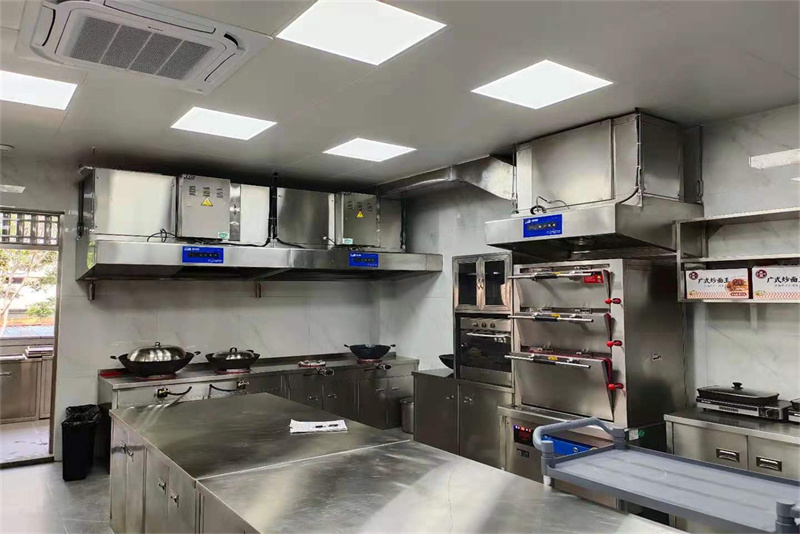
As workers carried the gas stove out of the kitchen at Tony’s Oven Pizza in Manhattan, New York, Chef Carlos muttered to himself, staring at the empty corner: “It’s like taking away a painter’s palette.” But after New York State’s “All Electric” law takes effect in 2026, this scene will be repeated in thousands of new restaurants.
As you ignite the blue flame of your gas stove in the kitchen, you might not have anticipated it—27 cities across the United States have already enacted laws to cut off the gas supply to commercial buildings, and this transformation is spreading at a rate of three new boroughs per month.
I. Why are many US states mandating gas-to-electricity conversions?
The first gas-to-electricity switch in Berkeley, California, in 2019 has spread like wildfire. New York State requires a complete ban on gas appliances in new commercial buildings that are seven stories tall or less. Los Angeles has set a mandate for restaurants to reduce emissions by 40% by 2030.
Massachusetts is even bundling subsidies with electrification. Behind these policies are shocking statistics: the carbon dioxide emitted each year by gas equipment in commercial kitchens across the United States is equivalent to 2.4 million cars driving around the earth day and night.
II. The Real Dilemma of Restaurant Owners: Cost, Efficiency, and Chef Revolt
The account books of Ms. Li, owner of the San Francisco Chinese restaurant “Golden Wok,” reveal the true anxieties of those in the restaurant industry. When she compared the price quote for a Lestov commercial induction cooktop next to her gas stove purchase order, the $8,500 to $2,000 price difference made her gasp.
1. Renovation Cost
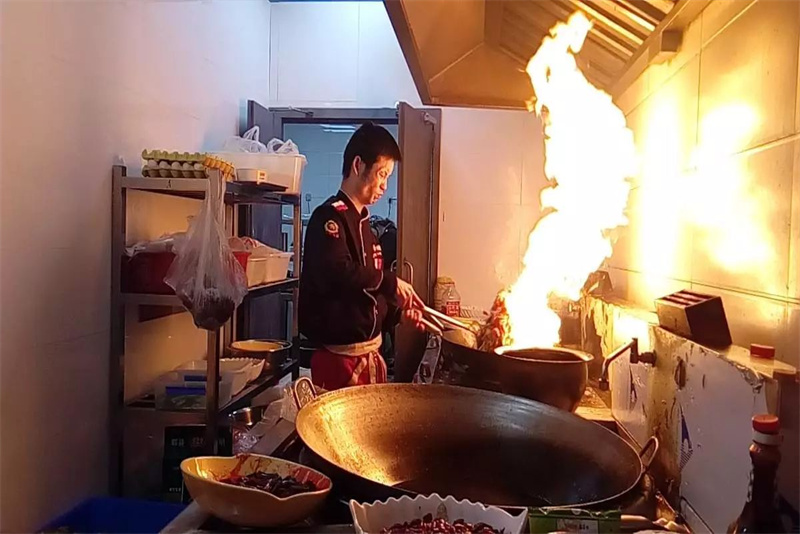
But City Hall’s renovation ultimatum was posted next to the cash register: Restaurants that fail to upgrade to electric appliances within three years will be subject to a special carbon emissions tax. Even more distressing was Chef Lao Wang’s protest: “Induction cooktops simply can’t produce that wok-fried aroma! Itt
Such doubts were commonplace in the industry until a groundbreaking experiment occurred in the kitchen of the Michelin-starred restaurant “Vespertine.” While using a Lestov Pro series induction cooktop for molecular gastronomy, Chef Jordan Kahn unexpectedly discovered that precise temperature control enabled the caramelization reaction to reach state-of-the-art levels.
Test data shows that after adding oil to 220°C, a traditional induction cooktop takes 9 seconds to return to temperature. In contrast, Lestov’s magnetic induction technology takes only 2.8 seconds, 0.3 seconds faster than a gas stove. When the time it takes to stir-fry broccoli was reduced from 52 seconds to 48, Chef Wang’s frown finally relaxed.
2. Policy Dividends
Policy dividends are reshaping the cost equation. Under Section 25C of the Inflation Reduction Act, restaurants can receive a 30% tax credit (capped at $5,000 per unit) for each Lestov induction cooktop installed. California’s SGIP program even subsidizes 40% of the electrical retrofit costs. A five-year total cost estimate for Detroit’s Motor City Grill reveals a startling truth.
Although the induction solution cost $63,000 upfront, after factoring in energy savings and insurance discounts, it saved $18,600 compared to the gas solution—and that doesn’t even include the $16,000 saved on exhaust system cleaning due to reduced fumes.
-
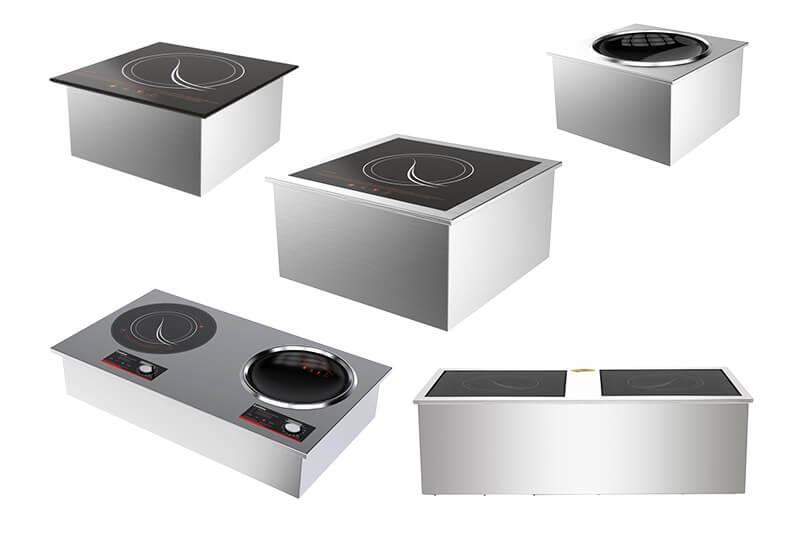
 Lestov Tabletop Commercial Induction Flattop Iron Griddle LT-TPL-B105
 -
 Lestov Tabletop 4 Burners Commercial Induction Cooktop LT-TBZ300IV-B105
 -
 Dual Basket Commercial Tabletop Induction Deep Fryer LT-TZL-B105
 -
 Éttermi asztali 2 égővel rendelkező indukciós wokfőző LT-TPA-B135
 -
 Éttermi asztali 2 égős indukciós főzőlap LT-TPP-B135
 -
 Teljes üvegből készült kereskedelmi indukciós főzőlap LT-QPM-C335
 -
 Tabletop Commercial 6 Burner Induction Cooktops LT-TBZ300VI-B135
 -
 5000W Countertop Restaurant Induction Wok Burner LT-TAM-B505
 -
 Éttermi asztali indukciós főzőlap 3500W LT-TPM-B535
III. Why are Professional-Grade Induction Cooktops the Ultimate Answer?
Choosing a commercial induction cooktop is like finding a lifelong companion in the kitchen. The painful lesson learned last year by the Seattle Chinese restaurant “Shuweixuan” is still fresh in our minds: they bought a 20kW induction cooktop from a certain brand for the sake of price, but after three consecutive pots of twice-cooked pork, it automatically reduced the power to 5kW.
They later understood the stark difference between “peak power” and “continuous power”—it’s like running a marathon at a 100-meter sprint.
1. Multiple Protections
Lestov laboratory endurance testing showed that after four hours of continuous operation at 15kW, the cast iron base of the Pro series pot maintained an astonishingly stable temperature of 230°C ± 0.5°C.
Disaster-proof design often saves a restaurant in times of crisis. The experience of Miami beachfront restaurant “Ocean Flame” was quite dramatic: after a hurricane passed through, the voltage suddenly increased by 30%, and all the kitchen equipment on the street went out of service, but their Lestov induction cooktop remained unharmed.
What makes the boss even more scared is that when the apprentice spilled the seafood soup last week, the IP68-level anti-overflow system cut off the power supply within 0.3 seconds – if this happened on a gas stove, the consequences of the boiling soup encountering an open flame would be unimaginable.
2. Smart Devices
The painful transition period requires a smart transition. The gradual transformation of Providence, a three-Michelin-starred restaurant in Los Angeles, is a textbook example: First, two Lestov induction cooktops were installed in the cold food area as a pilot project.
The chef spent three months adjusting the cooking parameters for 42 dishes. Once the team had adapted, the entire restaurant was completely renovated in three days during the off-season.
They even developed a dish that would have been impossible in the gas era: the “Salmon Hot Spring Egg,” achieved with 0.1°C precise temperature control, is now a must-order for every table.
While restaurant owners are still calculating the economics, a new generation of diners is already voting with their wallets. Data from the National Restaurant Association in 2024 shows that restaurants with zero-carbon certification see a 28% increase in average customer spending and a 1.7-fold increase in lunchtime table turnover. It explains why Chicago’s organic restaurant Green Spoon is willing to pay a premium.
The Lestov induction cooktops in their kitchens have become living advertisements in transparent display windows. The electronic screen displays real-time carbon emissions data, encouraging millennials who pursue sustainable living to pay an extra $8 for a carbon-footprint salad.
3. Innovative Dishes
At this historic turning point in the electrification of kitchens, Lestov engineer James Wilson’s advice is resounding: “Don’t ask how much money a piece of equipment will save you; ask how many years it will earn you.”
When Texas barbecue owners use our induction slow cookers to recreate the smoky flavor, when Japanese sushi chefs use instant cooling technology to achieve 1°C precision nigiri sushi, and when bakeries use induction pans to create zero-scorch crepes—what we’re witnessing isn’t the end of gas, but the rebirth of culinary art.
automatic cooking machine automata főzőgépek bbq chip fryer commercial cooking equipment commercial drop in induction cooker commercial food steamer commercial induction cooker commercial induction cooktop kereskedelmi indukciós mélysütő commercial induction fryer commercial induction hob commercial induction soup cooker Kereskedelmi indukciós gőzölős főző commercial induction wok cooker commercial kitchen cookware food steamer hob induction cooker induction cookware INDUCTION FRYER induction grill induction hob iron wok kitchen equipment repair guide restaurangt equipment restaurant equipment stainless steel cookware user's guidance
Kapcsolódó hozzászólások


Comments (0)