
The relentless Dubai sun beat down on the roof of “Spice Route,” a popular Indian…
The Automated Kitchen: Is This the Future of Chain Restaurants?
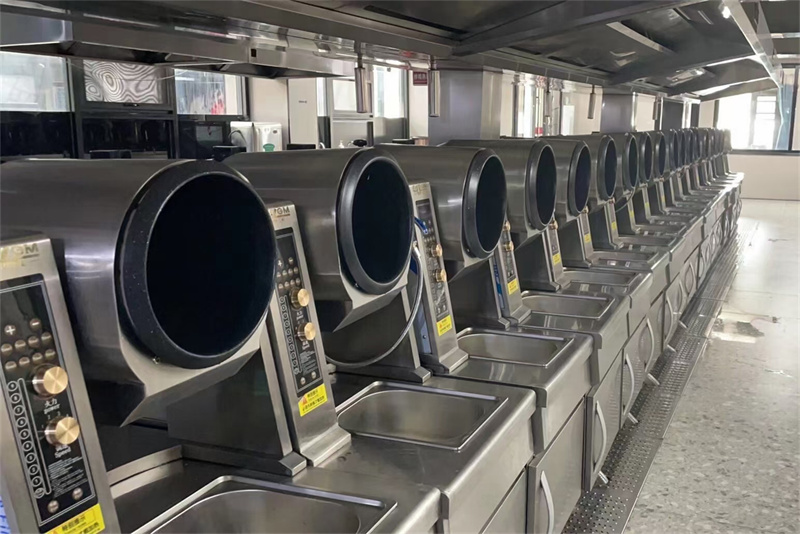
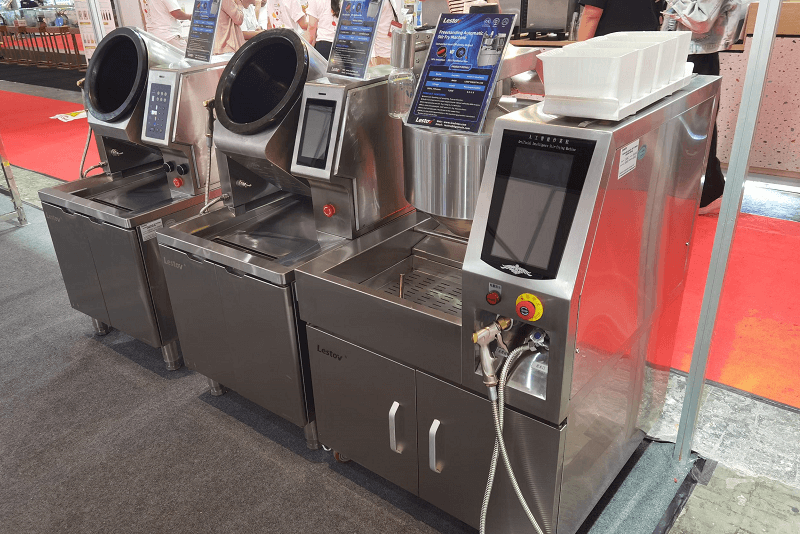
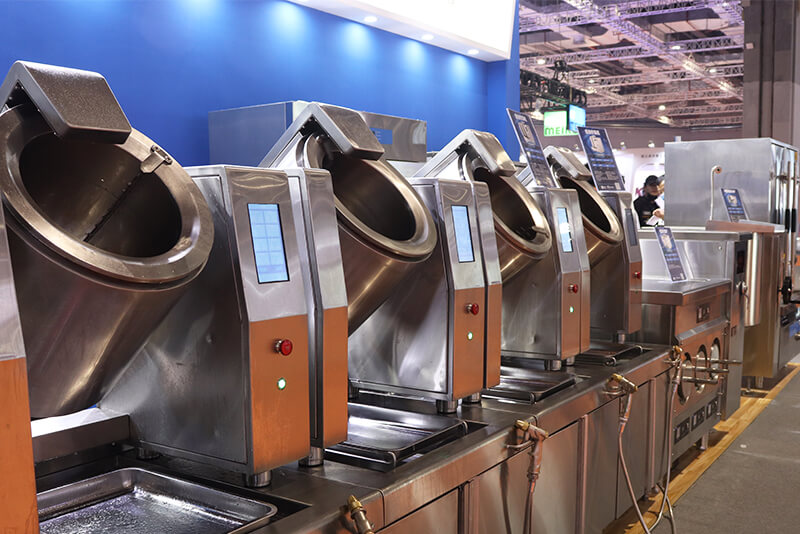
Walk into the back-of-house of a modern, forward-thinking chain restaurant, and you might witness a scene that feels both futuristic and inevitable. Instead of a line of chefs sweating over blistering flames, you see sleek, stainless-steel machines—automatic wok stations, precision grills, and robotic arms—executing dishes with rhythmic, unerring precision. This isn’t a sci-fi movie; it’s the rapidly emerging reality of the global food service industry.
The question is no longer if automation will change the restaurant landscape, but how and how quickly. For chain restaurant owners, investors, and culinary professionals, understanding this shift is no longer a luxury; it’s a strategic necessity.
This in-depth blog post will examine why automated cooking is an unstoppable trend in the restaurant industry. We will dissect its powerful drivers, address its genuine challenges (including the great ‘Wok Hei’ debate), and chart a practical path forward. Most importantly, we will provide a clear blueprint for what restaurant owners and chefs should do now to not only survive, but also thrive in the age of the automated kitchen.
The Inevitable Rise – Why Automation is a Game-Changer for Chains
The core challenges of running a multi-location food business have always been consistency, cost, and scalability. Automation provides a powerful, data-driven answer to these age-old problems.
1. The Holy Grail of Standardization and Consistency
Imagine a customer enjoying a plate of Kung Pao Chicken at a chain location in New York. A week later, they visit another branch in London. For the brand, the dream is for the customer to have an identical sensory experience both times. With human chefs, this is incredibly difficult to achieve. Factors like fatigue, mood, and subtle variations in technique lead to fluctuations in flavor, texture, and presentation.
(1)How Automation Solves It?
Automated cooking systems are the ultimate enforcers of consistency. They are programmed with exact parameters:
Precise Ingredient Dispensing: Portions are measured to the gram.
Exact Temperature Control: Oil heats to the perfect temperature, every time.
Programmed Cooking & Tossing: The machine follows the same sequence and timing for every dish.
The result? A plate of Mapo Tofu in Tokyo tastes exactly like the one in Toronto. This level of quality control builds immense brand trust and customer loyalty.
2. Taming the Twin Titans: Labor Costs and Efficiency
The restaurant industry is in the throes of a severe labor crisis. Finding and retaining skilled kitchen staff is harder and more expensive than ever. Simultaneously, the demand for speed, especially in delivery and takeout, is skyrocketing.
(1)How Automation Solves It?
Reduced Reliance on Scarce Labor: Automated woks and fryers don’t call in sick, ask for a raise, or get poached by a competitor. They can operate consistently during peak hours and staff shortages, ensuring business continuity.
Multi-Tasking and Speed: One employee can potentially manage several automated stations, dramatically increasing the kitchen’s output per labor hour. This “force multiplier” effect is crucial for profitability during rush periods.
3. Data-Driven Optimization and Waste Reduction
A traditional kitchen relies on experience and intuition to manage inventory and perfect recipes. An automated kitchen adds a layer of powerful, quantifiable data.
(1)How Automation Solves It
Smart, connected cooking robots are nodes in an Internet of Things (IoT) ecosystem. They generate valuable data on:
Ingredient Consumption: Tracking exactly how much of each item is used per dish for ultra-accurate inventory and ordering.
Equipment Performance: Monitoring machine health to schedule predictive maintenance before a breakdown occurs.
Menu Performance: Identifying the most (and least) popular dishes with precise data, informing future menu engineering and development.
This data leads to smarter purchasing, reduced spoilage, and a leaner, more profitable operation.
4. Enhancing Food Safety and “Bright Kitchen” Transparency
In a post-pandemic world, consumers are more conscious than ever of food hygiene. Furthermore, regulatory trends are pushing for “bright kitchen” initiatives, where food preparation is visible and transparent.
(1)How Automation Solves It?
Minimized Human Contact: Automated processes reduce the points where human hands touch food, lowering the risk of contamination.
Standardized Cleaning: Machines can be programmed with automated cleaning cycles, and their standardized designs make manual sanitation more straightforward and verifiable.
Built-in Transparency: The clean, precise nature of automated equipment naturally lends itself to open kitchen designs, building customer confidence.
The Human Touch – Addressing the Challenges Head-On
Despite its clear advantages, the path to full automation is not without hurdles. Acknowledging and addressing these is key to a successful implementation.
1. The “Wok Hei” Dilemma: Can a Robot Have Soul?
This is the most passionate debate, especially in the context of Asian cuisines. “Wok Hei” – that elusive, smoky, slightly charred flavor essence – is achieved through the intense, dancing flames of a powerful wok burner and the skillful tossing of a seasoned chef. Can a machine replicate this?
(1)The Current Reality
While advanced machines use super-heated surfaces and precise mechanics to simulate the “breath of the wok,” many connoisseurs argue that the result, while delicious and consistent, lacks the final layer of complex, unpredictable character that a master chef provides.
(2)The Evolving Perspective
It’s crucial to reframe the question. For many chain settings—especially fast-casual and delivery-focused models—the primary customer value proposition is consistency, speed, and accessibility, not the pursuit of a transcendent culinary moment. For these segments, the trade-off is more than acceptable.
2. The Significant Capital Investment
Integrating a full-scale automated kitchen is a major financial undertaking. The cost of high-end equipment, installation, and system integration can be prohibitive for smaller chains or independent operators.
(1)The Strategic Approach
The solution is a phased, ROI-driven investment. Chains should start by automating their highest-volume, most standardized dishes to see the fastest return, rather than attempting a full kitchen overhaul overnight.
3. Menu Limitations and Flexibility
Automated woks excel at stir-fries. Automated grills excel at burgers and steaks. But they are less adept at tasks requiring intricate knife skills, complex assembly, or highly adaptive, creative cooking.
(1)The Strategic Approach
Automation should be seen as a tool for the core menu, not the entire menu. It handles the volume work, freeing up human resources for the creative and complex dishes that define a brand’s premium offering.
The Future is Hybrid: A Blueprint for “Man-Machine Collaboration”
The ultimate future of chain restaurants is not a fully robotic, human-less kitchen. It is a harmonious and highly efficient “Hybrid Kitchen” model that leverages the strengths of both people and machines.
Model 1: The Central Kitchen + Automated Finishing Model
This is a dominant model for fast-food and QSR chains. The complex preparation—marination, sauce-making, partial cooking—is done in a central, industrial facility. The final cooking or heating is done by simple, foolproof automated equipment at the storefront, guaranteeing speed and consistency.
Model 2: The “Sous-Chef in a Box” Model
In this model, the automated machines act as the perfect, tireless line cooks. They handle the foundational, repetitive tasks: cooking the rice, grilling the chicken for salads, and boiling the pasta. The human chefs, freed from this drudgery, focus on high-value tasks:
Final Assembly & Plating: Adding artistic touches and garnishes.
Sauce & Dressing: Applying the “secret配方” that makes the dish unique.
Specialty & Signature Dishes: Crafting the high-margin items that require a personal touch.
This model preserves the “soul” of the kitchen while massively boosting its operational capacity.
Your Strategic Playbook: What to Do Now
The transition is happening. Waiting is a strategy that leads to obsolescence. Here is your actionable playbook.
1. For the Restaurant Owner & Decision-Maker:
(1)Audit Your Menu and Operations
Analyze your menu. Identify the 5-10 dishes that account for 80% of your sales and are highly standardized. These are your prime candidates for automation. Calculate the labor, time, and waste costs associated with them.
(2)Adopt a Phased Investment Strategy
You don’t need to bet the farm. Start with one or two key pieces of equipment. Pilot them in one location. Gather data on their impact on speed, labor costs, and customer feedback before rolling out chain-wide.
(3)Redesign Your Kitchen and Staffing Model
An automated kitchen requires a new workflow. Plan for zones: prep, automated core cooking, manual finishing, and assembly. Restructure your team, creating new roles like “Automation Station Manager” or “Quality & Finishing Chef.”
(4)Reframe Your Marketing Message
For QSR/Fast-Casual: Lead with benefits like “Perfectly Consistent, Every Time,” “Lightning-Fast Service,” and “100% Hygienic & Safe.”
For Full-Service: Tell a “Best of Both Worlds” story: “Harnessing Technology to Free Our Chefs’ Creativity. Our machines ensure your favorite dish is always perfect; our chefs ensure your next discovery is extraordinary.”
2. For the Chef & Culinary Professional:
(1)Elevate Your Role from Executor to Creator and Director
Your value is no longer solely in your ability to flip a wok for eight hours straight. It’s in your palate, your creativity, and your leadership.
Become a R&D Chef: Focus on developing new recipes, sauces, and menu concepts. Your creative mind is something no machine can replicate.
Master High-Tech Culinary Arts: Dive into techniques that complement automation, like sous vide, fluid gel creation, or advanced fermentation. Become the expert who uses technology to create new experiences.
(2)Become the “Human in the Loop” – The Orchestrator: Embrace the role of a conductor.
Learn the Machine: Don’t fear the technology; master it. Understand its programming, its maintenance, and its nuances. The chef who can “speak machine” is incredibly valuable.
Focus on the Final Touch: Specialize in the finishing steps that machines cannot do—the perfect sear on a scallop, the hand-crafted garnish, the final drizzle of an infused oil. This is where you impart the “soul.”
(3)Develop Leadership and Management Skills
As automation handles more routine tasks, the kitchen team will need more managers and leaders. Position yourself to train, manage, and inspire the future hybrid kitchen team.
Conclusion: The Two Battlefields of the Future
The rise of automation is not the end of the chef or the chain restaurant. It is a fundamental evolution that is splitting the industry into two distinct, equally valid battlefields:
1. The Battlefield of Ultimate Efficiency and Scale:
Fought by QSR, fast-casual, and cloud kitchen chains. Here, automation will be the standard, the price of entry. Victory will be determined by data, logistics, and flawless, cost-effective execution.
2. The Battlefield of Ultimate Experience and Creativity
Fought by full-service, fine-dining, and experiential concepts. Here, automation will be a silent partner in the back, handling basics and supporting the true stars—the chefs—who will use their freed-up time and creative energy to craft memorable, personalized dining experiences.
For the savvy restaurant owner, the choice is not whether to pick a side, but how to strategically deploy technology to win on your chosen battlefield. For the ambitious chef, the future is brighter than ever, provided you are willing to trade your spatula for a conductor’s baton.
The automated kitchen isn’t coming. It has already arrived. The question is: are you ready to get on board? Ready to explore how kitchen automation can transform your chain restaurant business? Contact our experts today for a free consultation and discover the right solutions for your unique needs.
ماكينة طبخ أوتوماتيكية آلات الطبخ الأوتوماتيكية bbq chip fryer commercial cooking equipment commercial drop in induction cooker commercial food steamer طباخ الحث التجاري موقد الحث التجاري commercial induction deep fryer commercial induction fryer موقد الحث التجاري commercial induction soup cooker طباخات البخار التعريفي التجارية طباخ الحث التجاري commercial kitchen cookware food steamer hob طباخ الحث induction cookware INDUCTION FRYER induction grill induction hob iron wok kitchen equipment repair guide restaurangt equipment restaurant equipment stainless steel cookware user's guidance
منشورات ذات صلة


Comments (0)