
Across North America, Europe, Australia, and Asia-Pacific, commercial food-service operators are facing a monumental regulatory…
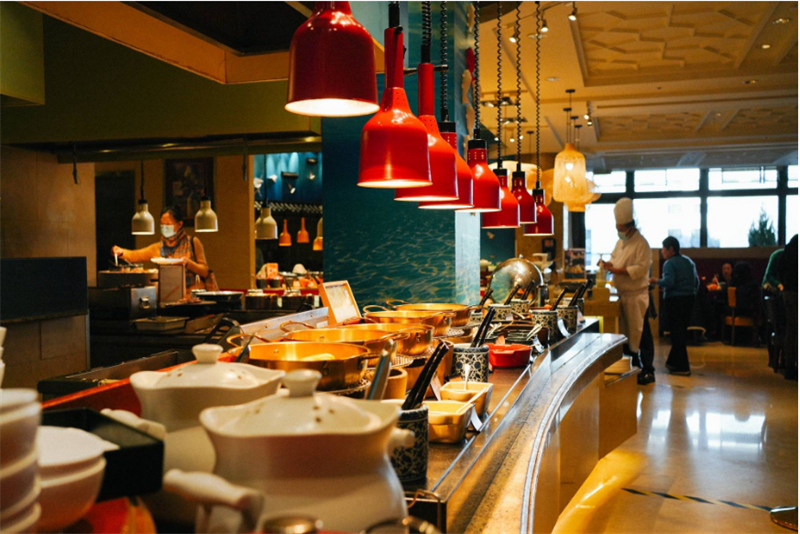
Solving the Global Culinary Labor Crisis Through Automated Induction Systems
The global Asian and fast-casual restaurant sector is facing an unprecedented structural challenge: an acute, worsening shortage of skilled culinary labor combined with escalating wage inflation.
In key international markets—including North America, Europe, Australia, and the Middle East—the inability to recruit and retain experienced wok chefs has become the single greatest bottleneck to brand expansion, menu consistency, and profit margin retention.
Traditional Asian commercial kitchens rely on human intuition for heat management (Wok Hei), ingredient timing, and seasoning. This manual dependency creates three systemic vulnerabilities:
Extreme Quality Inconsistency
Dish flavor, texture, and portioning fluctuate dramatically depending on individual chef shifts.
Unbalanced Labor Cost Ratios
Highly skilled wok chefs command premium wages, driving back-of-house (BOH) labor costs to unsustainable levels (35% – 45% of gross revenue).
Expansion Gridlock
Franchise chains cannot scale nationwide or globally without a multi-month training pipeline for every new store opening.
This Whitepaper demonstrates how Automated Induction Stir Fry Machines integrated with Multiple Burner Commercial Induction Hobs solve the labor crisis. By digitizing cooking profiles, automating thermal transfer, and enabling one-touch cloud synchronization, this automated induction suite allows unskilled kitchen staff to produce master-chef-quality meals with zero training lag—reducing BOH labor costs by up to 60% while unlocking rapid global franchise scalability.
(1)TRADITIONAL CHEF LINE vs. AUTOMATED INDUCTION ECOSYSTEM
TRADITIONAL CHEF LINE: High Chef Dependency + Taste Variance + High Wages → Slow Scaling, High Turnover & Compressed Margins
AUTOMATED INDUCTION: Digital Cloud Recipes + 1-Touch Exec + Zero-Skill Labor → 100% Menu Consistency, 60% Labor Savings & Rapid Scale
1. Macro Industry Trends: The Labor Crunch in Global Food Service
Macroeconomic shifts are forcing restaurant groups to re-engineer back-of-house operations fundamentally.
(1)Key Operational Drivers
Immigration & Visa Restrictions
Stricter culinary visa regulations in Western nations have curtailed the inflow of specialized Asian wok cooks, causing severe talent deficits.
Generational Workforce Shift
Younger workers increasingly reject hot, noisy, physically demanding traditional wok stations, driving employee turnover rates past 70% annually in fast-casual segments.
The Franchise Standardization Mandate
Multi-unit operators require 100% menu uniformity across hundreds of locations to protect brand equity and customer retention.
Products by Category
-

Automatic Cooking 6 Burners Commercial Induction Cooker LT-B300VI-E235
-

Automatic Food Stir-Fryer Wok Machine-LT-CD300L-A105
-

Automatic Robotic Wok Cooking Machine for Restaurant Canteen LT-CD300-B205
-

Commercial Gas Automatic Wok Machine Intelligent Stir Fryer LT-TGS30R
-

Pultový automatický stroj na smaženou rýži -LT-TGD36
-

Countertop Commercial Gas Automatic Fried Rice Machine LT-TGD36R
-

Countertop Robot Wok Cooker with Touch Screen LT-TGQ30J
-

Countertop Rotating Stir-Fry Machine for Restaurant LT–TGD30
-

Heavy-duty Automatic Stir-Fryer for Commercial Kitchen LT-GD36
2.Technology Blueprint: Digitizing the Art of Wok Hei & Precision Simmering
To replace human guesswork with algorithmic accuracy, automated induction systems translate complex culinary techniques into digital parameters: Temperature (°C), Rotation Speed (RPM), Time (Seconds), and Power Curve (kW).
(1)THE DIGITAL RECIPE ENGINE ARCHITECTURE
| Master Chef Recipe Creation | Parameter Digitization | Cloud Deployment |
| Flame, Motion, Timing | kW, RPM, Sec, °C | Multi-Unit Sync |
| RESULT: 100% FLAVOR REPLICATION EXECUTED BY ENTRY-LEVEL STAFF | ||
Core Architectural Components
Automatic Induction Drum Stir Fryers: Equipped with high-frequency induction heating coils, these units simulate multi-dimensional tossing through 3D elliptical drum rotation. Microprocessors dynamically adjust power outputs up to 300℃+ in seconds, replicating authentic Wok Hei (sear and caramelization) without open flames.
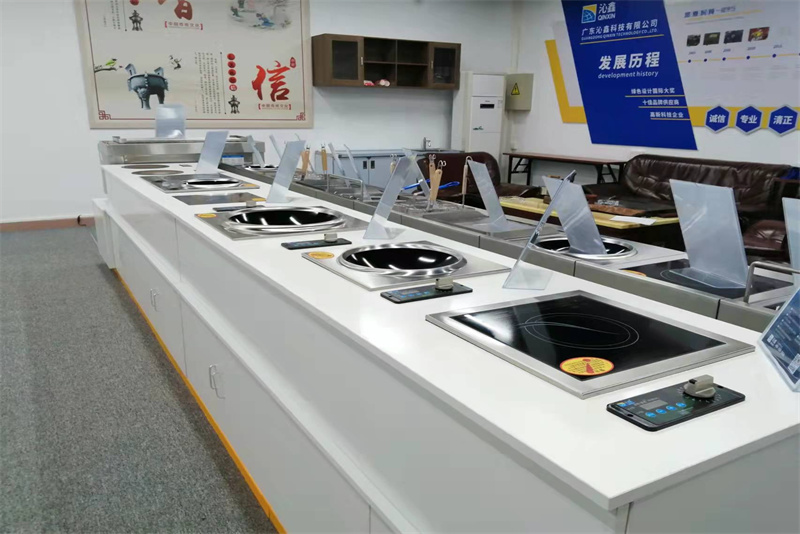
Multiple Burner Commercial Induction Hobs
Featuring independent microprocessor zone control, these 4-head and 6-head hobs store multi-stage cooking programs for claypot rice, soups, and slow-braised sauces.
Cloud-Connected Recipe Management Ecosystem
Corporate R&D chefs upload digitized recipes to a centralized IoT portal. With a single click, updated cooking programs are pushed via Wi-Fi/4G to every machine across global store networks instantly.
Products by Category
-

3500W komerční indukční vařič LT-TPM-B135
-

3500W Commercial Portable Induction Wok Burner LT-TAM-B135
-

Indukční varná deska pro restaurace se 4 hořáky a knoflíkem LT-B300IV-B135
-
Automatic Cooking 6 Burners Commercial Induction Cooker LT-B300VI-E235
-

Dvouhořáková indukční varná deska s elektrickým sporákem LT-B300II+DTLII
-

Double Burners Commercial Induction Hobs LT-B300II-E105
-

Dvouhořákový indukční sporák LT-B300II-B135 pro restaurace
-

Four Burners Industrial Induction Stove with Stand LT-B300IV
-

Čtyři zóny 2 hořáky Komerční indukční vařič Wok LT-B300VI-B105
3.Operational Playbook: De-Skilling the Back-of-House
Implementing automated induction equipment transforms the operational structure of the kitchen, shifting BOH staff from “cooks” to “system supervisors.”
(1)KITCHEN LABOR WORKFLOW TRANSFORMATION
TRADITIONAL WORKFLOW: Portion -> Manual Flame Adjust → Manual Toss -> Plate → (Requires 3-5 Years Wok Experience / High Salary)
(2)Strategic Operational Advantages
Minute Staff Orientation
10-New entry-level hires simply select a visual menu icon on the touchscreen, load pre-portioned ingredients, and press start.
Multi-Station Supervision
Because automated drum fryers handle tossing and temperature control autonomously, a single entry-level employee can oversee 3 to 4 cooking stations simultaneously.
Elimination of Over-Cook and Scrap Waste
Precision digital temperature limits eliminate burnt food, reducing ingredient waste by 12% – 18%.
4.Strategic Investment & ROI Analysis: Traditional vs. Automated Line
To support CFOs, franchise developers, and procurement officers in financial evaluation, this decision matrix details labor, operational, and financial metrics:
| Strategic Metric | Traditional Manual Gas Wok Line | Automated Induction Ecosystem |
| BOH Skilled Labor Dependency | Extremely High (Specialized Wok Chefs) | Zero (Entry-Level Kitchen Assistants) |
| Staff Training Onboarding Time | 3 – 6 Months | 10 – 15 Minutes |
| Multi-Unit Taste Consistency | Low (20% – 30% Taste Variance) | 100% Identical Across Global Stores |
| Dish Execution Speed | 3 – 5 Minutes (Human Fatigue Variable) | 60 – 90 Seconds (Consistent Machine Rhythm) |
| Kitchen Staffing Requirement | 3 Wok Chefs + 1 Prep Cook | 1 System Operator for 3–4 Stations |
| Direct BOH Labor Cost Ratio | 35% – 45% of Revenue | 15% – 20% of Revenue (Up to 60% Savings) |
| Recipe IP Protection | Low (Chefs leave with recipes) | High (Encrypted Corporate Cloud Software) |
| Average Capital Investment Payback | Baseline | 6 to 10 Months via Labor Savings |
5.Strategic Procurement & Action Plan
For restaurant chains, hotel groups, and ghost kitchen operators preparing for international expansion, transitioning to automated induction systems requires a structured rollout strategy.
(1)Recommended Action Plan
Phase 1: Menu & Recipe Digitization
Work with factory culinary technicians to map your core menu items into digital power curves, rotational speeds, and temperature thresholds.
Phase 2: Pilot Station Integration
Deploy a test station consisting of 1 Tabletop Automatic Stir Fry Machine and 1 Multi-Burner Induction Hob in a high-volume trial store to evaluate labor reduction and throughput gains.
Phase 3: Global Network Rollout
Establish automated induction as the mandatory equipment spec for all new corporate and franchised store builds, leveraging cloud updates for centralized menu control.
6.Conclusion: Future-Proof Your Restaurant Group Today
The traditional reliance on skilled, expensive culinary labor is no longer a viable operating model for scaling restaurant brands in the modern global market.
By adopting Automated Induction Stir Fry Machines and Multiple Burner Commercial Induction Hobs, you permanently resolve labor bottlenecks, guarantee 100% recipe consistency across international locations, slash operating costs, and protect corporate recipe IP.
De-risk your expansion strategy, optimize back-of-house economics, and lead the future of automated dining.
For franchise developers, corporate culinary directors, and foodservice equipment distributors seeking factory-direct automated induction systems, contact our global engineering team today.
We offer custom OEM/ODM software branding, IoT cloud portal integration, factory culinary trial sessions, and competitive factory-direct pricing for international project tenders.
automatický stroj na vaření automatické varné stroje bbq chip fryer commercial cooking equipment commercial drop in induction cooker commercial food steamer commercial induction cooker commercial induction cooktop komerční indukční fritéza commercial induction fryer commercial induction hob commercial induction soup cooker Komerční indukční parní vařič commercial induction wok cooker komerční kuchyně cookware food steamer hob indukční vařič induction cookware INDUCTION FRYER induction grill induction hob iron wok kitchen equipment repair guide restaurangt equipment restaurant equipment stainless steel cookware user's guidance
Související příspěvky
.jpg)


Comments (0)