
The global Asian and fast-casual restaurant sector is facing an unprecedented structural challenge: an acute,…
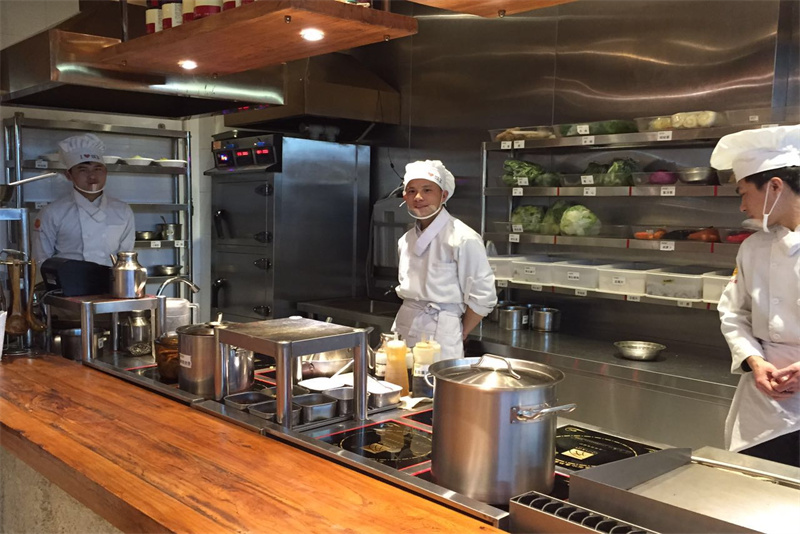
How Automatic Cooking Machines and Smart Induction Cookers Rescued Peak-Hour Table Turnover
Discover how chain restaurants eliminate reliance on high-cost chefs while guaranteeing 100% dish consistency. Read this real-world case study on leveraging commercial automatic cooking machines, smart induction cookers for standardization, and automated noodle cookers to slash labor costs by over 50% and double peak-hour output.
The Friday Night Nightmare: A Single Points of Failure in Chain Dining
For Marcus Vance, Chief Operations Officer of Savor & Stir, a fast-growing Asian-fusion chain with 10 locations, Friday nights were typically a celebration of revenue. But on one fateful Friday at 7:00 PM, his flagship downtown location turned into a operational war zone.
The store’s head chef had to leave abruptly due to a family emergency. The line cook, who had only been with the company for two weeks, was thrown onto the main wok station.
(1)The result was a cascade of operational failures
Wild Quality Fluctuations
The brand’s signature Mongolian Beef was charred at Table 4, under-seasoned at Table 12, and soggy at Table 8. The refund and dish-rejection rate shot up to 18% in less than two hours.
Ticket Bottlenecks
Average ticket times ballooned from an acceptable 11 minutes to a disastrous 29 minutes. Frustrated guests abandoned the queue outside, wiping out potential weekend revenue.
Crushing Labor Costs
To prevent such bottlenecks, every branch was forced to hire three to four skilled, high-salaried chefs. Yet, turnover remained at a staggering 35% annually. Every new hire meant weeks of painful retraining and compromised food quality.
“Chain dining isn’t just about selling food; it’s about selling predictability,” Marcus stated during an emergency executive briefing. “If the taste of our signature dish depends entirely on who happens to be holding the wok on a given night, we don’t have a chain brand—we have ten unpredictable individual restaurants. We cannot scale to 50 locations on this model.”
Determined to break free from the “chef dependency trap,” Marcus spearheaded an operational overhaul: replacing traditional gas flame ranges with smart commercial induction cookers for standardization, commercial automatic cooking machines for chain restaurants, and precision-controlled automated noodle cookers.
This is the story of how Savor & Stir turned culinary chaos into a science of high-margin repeatability.
Shift to Data-Driven Cooking: Replacing “Chef’s Intuition” with Precise Parameters
The core philosophy behind “De-Chefization” (decoupling restaurant output from specialized culinary labor) is simple: convert subjective human experience into objective, programmable parameters.
Traditional gas cooking relies heavily on a chef’s “feeling” for heat control (Wok Hei), visual cues, and manual seasoning guesswork. Under high-stress peak hours, physical fatigue and emotional distress inevitably corrupt these human variables.
By integrating state-of-the-art smart commercial induction cookers for standardization, Savor & Stir digitized their entire recipe catalog. Each dish was broken down into four strict automated steps:
Thermal Profiling
Pre-programmed multi-stage induction heating curves (e.g., rapid sear at 220°C for 45 seconds, drop to 160°C for simmering).
Automated Agitation
Variable-speed 3D drum rotation mimicking hand-tossing without crushing delicate ingredients.
Prompted Dosing
Audio-visual cues signaling kitchen hands precisely when to add pre-portioned sauces or fresh aromatics.
Automatic Dispensing
Precision fluid meters injecting exact quantities of cooking oil and water down to the milliliter.
Products by Category
-

Automatic Cooking 6 Burners Commercial Induction Cooker LT-B300VI-E235
-

Automatic Food Stir-Fryer Wok Machine-LT-CD300L-A105
-

Automatic Robotic Wok Cooking Machine for Restaurant Canteen LT-CD300-B205
-

Commercial Gas Automatic Wok Machine Intelligent Stir Fryer LT-TGS30R
-

काउंटरटॉप कमर्शियल स्वचालित फ्राइड राइस मशीन -LT-TGD36
-

Countertop Commercial Gas Automatic Fried Rice Machine LT-TGD36R
-

Countertop Robot Wok Cooker with Touch Screen LT-TGQ30J
-

Countertop Rotating Stir-Fry Machine for Restaurant LT–TGD30
-

Heavy-duty Automatic Stir-Fryer for Commercial Kitchen LT-GD36
Real-World Operational Data: Manual Wok vs. Automatic Cooking Machines
Three months after replacing traditional gas ranges with automated induction equipment at their flagship store, Marcus conducted a comprehensive audit comparing historical manual performance against the new automated workflow.
Table 1: Manual Cooking vs. Commercial Automatic Cooking Machine Efficiency
| Operational Metric | Traditional Manual Wok Station (3 Chefs + 2 Prep Cooks) | Smart Automated Induction Setup (2 Line Operators + Auto-Cookers) | Operational Impact & Business Value |
| Average Cook Time per Dish | 4.5 minutes / order | 2.5 minutes / order | 44.4% faster preparation speed |
| Dish Consistency Error Rate (Salinity, Texture, Color Deviation) | 12.0% – 18.0% (Fluctuates with fatigue) | < 1.2% (Strict micro-processor execution) | Over 90% reduction in quality variance |
| Peak-Hour Output Capacity | 80 dishes / hour | 150 dishes / hour | 87.5% increase in kitchen throughput |
| Monthly Kitchen Labor Expense | $22,500 / store | $9,800 / store | 56.4% reduction in labor overhead |
| New Hire Training Onboarding | 3 to 6 months (Requires skilled wok background) | 1 to 2 days (Simple touchscreen & prompt training) | 97% reduction in onboarding downtime |
| Ambient Kitchen Temperature | 42°C – 48°C (107°F – 118°F) | 24°C – 26°C (75°F – 78°F) | Massive reduction in HVAC costs & staff turn |
“Today, a temp worker who joined us two days ago can push a button on our induction touchscreen, follow the timed ingredient prompts, and produce a Mongolian Beef that tastes identical to the one crafted by our executive chef,” says Marcus. “The equipment removed human error from the equation.”
The Equipment Matrix: Building a Smart All-Electric Line
Achieving complete standardization across a diverse menu requires more than just(wok-cooking)automation. Marcus upgraded the entire kitchen ecosystem using specialized commercial induction and steam appliances, creating a streamlined assembly line across all stations.
Below is the technical matrix utilized by Savor & Stir to automate their wok, rice, noodle, and seafood prep stations.
Table 2: Multi-Functional Commercial Equipment Technical & Control Parameters
| Equipment Type | Core Automation Technology | Temperature & Time Precision | Key Performance Indicators (KPIs) | Operational Pain Point Solved |
| वाणिज्यिक स्वचालित खाना पकाने की मशीन | •3D Induction Heating•Planetary/Drum Rotation•Pre-set Recipe Memory | Temp: ±1°C accuracyTime: Precise to 0.1s | •Power: 12kW – 15kW•Capacity: 3kg – 5kg / batch•Output: Up to 40 kg/hr | Eliminates reliance on master chefs; cures taste inconsistency; slashes kitchen labor footprint. |
| Smart Induction Claypot / Stew Stove | •Multi-head Zone Sensing•Infrared Bottom Thermal Reader•Auto Crust-Detection | Multi-stage auto-curvesAuto shut-off upon completion | • Power: 3.5kW per burner• Configuration: 6, 8, or 12 burners• Thermal Efficiency: >90% | Prevents burning/scorching; eliminates continuous human monitoring; reduces ambient heat radiation. |
| Automated Noodle Cooker with Lift | •Auto-Basket Lifting•Auto Water-Replenishment•Continuous Induction Boil | Water Temp: Constant 98°CTimer: 0.1s resolution per basket | See Noodle Cooker Capacity Guide below:• Output: 200–350 bowls/hr• Power: 12kW – 18kW | Eliminates soggy/undercooked noodles during rushes; frees up cook hands from basket timing. |
| Smart Steam Cabinet / Seafood Steamer | •Independent Steam Generator• Pressure & Temp Feedback•Multi-deck Separation | Temp: 100°C – 110°CSteam Generation: < 3 mins | • Water savings: Up to 40%• Energy savings: 30% vs gas• Zero flavor transfer between decks | Prevents over-steaming delicate proteins; eliminates long pre-heat delays common in gas steamers. |
Deep Dive: Commercial Noodle Cooker Capacity & Selection Guide
Noodle and pasta stations are notorious bottlenecks in fast-casual concepts. During peak lunch rushes, putting noodles in for 30 seconds too long ruins the dish texture (al dente or Q-texture), while pulling them out too early leads to customer complaints.
As part of their standardization protocol, Savor & Stir referred to the following selection criteria when sizing their automated induction noodle cookers:
Noodle Station Sizing & Capacity Reference
Small Express Outlets (30–50 seats):
- Equipment Recommendation: 3-Basket Automatic Lift Induction Noodle Cooker (8kW – 10kW).
- Throughput Capacity: 100 – 140 portions per hour.
- Key Feature: Compact countertop design, integrated starch-skimming drain.
Medium High-Volume Branches (80–150 seats):
- Equipment Recommendation: 6-Basket Independent-Control Auto-Lift Cooker (12kW – 15kW).
- Throughput Capacity: 200 – 260 portions per hour.
- Key Feature: Dual-tank temperature separation, programmatic basket timers per noodle type (e.g., Ramen vs. Udon vs. Rice Noodles).
(150+ seats / Heavy Delivery Volume):
- Equipment Recommendation: 9-Basket to 12-Basket Heavy-Duty Floor-Standing Induction Cooker (18kW – 24kW).
- Throughput Capacity: 350+ portions per hour.
- Key Feature: Continuous auto-water dosing to maintain boil density without thermal drop-offs.
Scaling Up: Single-Store Financial Model & ROI Analysis
With 10 prototype stores successfully converted, Marcus evaluated the financial viability of scaling this “smart all-electric, de-chefized” blueprint to 40 upcoming franchised locations.
While induction and automated machinery require a higher upfront equipment purchase compared to low-tech legacy gas stoves, the operational savings result in a remarkably short payback period.
Table 3: Single-Store Financial Forecast & Equipment ROI (150–200 m² Store Blueprint)
| Financial / Operational Category | Legacy Gas-Fired Kitchen Setup | Smart All-Electric Automated Setup | Variance & Strategic Advantage |
| Initial Kitchen Equipment CapEx | $28,000 (Gas woks, standard burners, basic hood) | $42,000 (Auto-cookers, induction stoves, smart steamers) | +$14,000 initial investment premium for smart equipment. |
| Kitchen Staffing Requirement | 1 Head Chef, 2 Line Cooks, 2 Prep HandsTotal: 5 Staff per shift | 1 Kitchen Supervisor, 2 Line OperatorsTotal: 3 Staff per shift | Reduction of 2 FTEs (Full-Time Equivalents) per store. |
| Annual Kitchen Labor Cost | $180,000 / year | $84,000 / year | Direct annual savings of $96,000 per location. |
| Monthly Energy Utility Bill | $3,200 / month (Gas + Electric HVAC) | $1,850 / month (All-Electric Induction) | 38.2% monthly utility savings (Induction heat transfer efficiency is ~90% vs gas ~35%). |
| Kitchen Footprint Required | 45 m² (25% of store footprint) | 30 m² (16% of store footprint) | 15 m² saved, converting kitchen space into 12 additional dining seats. |
| Net Equipment Payback Period (ROI) | — | 1.6 to 2.8 Months | The $14k CapEx premium is fully recovered within 90 days via labor and energy savings. |
Products by Category
-

12 Steaming Trays Restaurant Induction Food Steamer LT-ZF12-120
-

2 Holes Countertop Induction Noodle Cooker for Restaurant LT-TZMII-B135
-

24 Trays Commercial Induction Rice Steamer LT-ZF24-E120
-

27L Commercial Double Baskets Induction Fryer for Food Truck LT-ZLII
-

3 टियर कमर्शियल इंडक्शन सीफूड स्टीमर LT-HI-E125
-

3500W कमर्शियल काउंटरटॉप इंडक्शन कुकर LT-TPM-B135
-

3500W Commercial Portable Induction Wok Burner LT-TAM-B135
-

3500W टेबलटॉप रेस्तरां इंडक्शन वोक स्टोव LT-TAM-A135
-

4 Baskets Commercial Induction Ramen Cooker LT-TMIV-B105
Why Modern Chain Brands Must Transition to Induction Automation
The transition from traditional gas kitchens to smart electric commercial equipment is no longer an optional innovation—it is a fundamental requirement for survival in modern food service.
By eliminating the variables of human fatigue, high turnover rates, and escalating fuel costs, automated induction kitchens empower restaurant groups to achieve three core milestones:
Uncompromising Consistency
Every branch serves identical-tasting food whether it’s a Tuesday afternoon or a holiday rush.
Agile Scalability
Opening a new store no longer depends on scouting and hiring localized culinary talent. You can open a new kitchen in days with easily trained operators.
Favorable Economics
Slashing kitchen labor overhead by up to 55% while reducing energy bills instantly elevates store-level EBITDA margins.
Partner with Us: Elevate Your Restaurant Chain with Smart Cooking Solutions
Are high chef salaries, inconsistent food quality, and slow ticket times holding back your restaurant group’s expansion?
As a premier manufacturer of high-performance commercial kitchen equipment, we specialize in helping restaurant chains, franchises, and commercial facilities transition into high-efficiency, all-electric, automated operations.
Our Comprehensive Equipment Portfolio Includes:
Automated Cooking Systems
Commercial automatic cooking machines, smart 3D drum wok cookers, multi-head commercial induction stoves.
Precision Induction Range
Commercial induction soup kettles, heavy-duty induction woks, induction flat-top griddles, and commercial induction deep fryers.
Specialized Automated Stations
Auto-lift commercial noodle cookers, smart induction claypot stoves, commercial steam sterilizer cabinets, and seafood steamers.
Ventilation & Fabrication
High-efficiency electrostatic precipitators (ESP), centrifugal exhaust fans, stainless steel hoods, and custom 304 stainless steel prep tables.
Ready to Build Your Kitchen of the Future?
Contact our engineering and kitchen design consultants today to receive a custom ROI analysis, equipment layout design, and wholesale chain pricing.
👉 [Contact Our Commercial Kitchen Specialists Today]
📧 Email: lestov@dgqinxin.com
🌐 Website: https://leadstov.com/
स्वचालित खाना पकाने की मशीन स्वचालित खाना पकाने वाली मशीनें bbq chip fryer commercial cooking equipment commercial drop in induction cooker commercial food steamer वाणिज्यिक प्रेरण कुकर वाणिज्यिक प्रेरण कुकटॉप commercial induction deep fryer commercial induction fryer वाणिज्यिक प्रेरण हॉब commercial induction soup cooker वाणिज्यिक प्रेरण स्टीमर कुकर वाणिज्यिक प्रेरण कड़ाही कुकर commercial kitchen cookware food steamer hob इंडक्शन कुकर induction cookware INDUCTION FRYER induction grill प्रेरण हॉब iron wok kitchen equipment repair guide restaurangt equipment restaurant equipment stainless steel cookware user's guidance
संबंधित पोस्ट


Comments (0)