
For David Vance, Managing Director at Apex Global Food Service Equipment Distribution—an international importer…

The Gasless Revolution: Complete 2026 Guide to Commercial Induction & Ventless Kitchen Systems
In early 2025, when Executive Chef Julian was preparing to open his second upscale fusion restaurant inside a historic commercial building in central London, he received what felt like a “death sentence” from the landlord and local fire authority:
“Due to structural heritage limitations and new municipal carbon-reduction bylaws, no gas line installation is permitted in this building. Furthermore, penetrating the exterior facade for traditional exhaust ductwork is strictly prohibited.”
For a chef raised on high-heat open flames and the roaring hum of massive exhaust fans, this felt like the end of his expansion dream. Yet, just eight months later, Julian’s restaurant opened to rave reviews. Step inside his kitchen today, and you won’t find suffocating heat, roaring exhaust ducts, or naked flames.
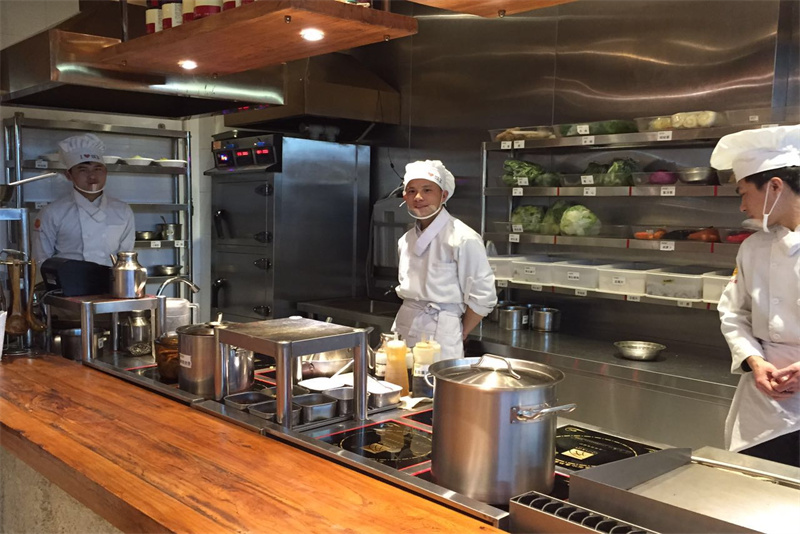
Instead, you’ll see a sleek, silent, and immensely powerful operation driven by commercial induction cooking suites and all-in-one ventless hoods with integrated Electrostatic Precipitators (ESP).
Julian’s story is no longer an anomaly. From gas bans in North American cities to Europe’s stringent zero-carbon mandates and astronomical ductwork costs in Asian and Middle Eastern shopping malls, electrification and ductless filtration are irreversibly reshaping the global foodservice landscape.
As a foodservice operator, equipment dealer, or kitchen consultant, are you ready for this 2026 commercial kitchen revolution?
1. Why Commercial Kitchens Worldwide Are Phasing Out Gas and Traditional Ducts
The global migration away from gas-powered kitchens is not merely driven by environmental goodwill—it is enforced by three unavoidable commercial realities:
(1) Regulatory Compliance and Municipal Pressure
European Ecodesign & Carbon Directives: Strict carbon footprint mandates are accelerating the removal of fossil-fuel gas appliances across institutional cafeterias, hotel chains, and QSRs.
North American Gas Bans: Major metropolitan cities (including New York and San Francisco) have enacted building codes that severely restrict or prohibit natural gas hookups in new commercial constructions.
Grease and Odor Environmental Fines: Urban commercial districts enforce zero-tolerance policies on airborne grease and VOC emissions. Traditional ductwork exhausting raw smoke frequently incurs heavy municipal fines.
(2) Escalating Energy and HVAC Costs
Traditional atmospheric gas burners operate at an abysmal thermal efficiency of just 35% to 40%, dumping over 60% of their heat directly into the ambient air. To evacuate this heat, operators must run massive makeup air units (MAU) and blast ambient air conditioning.
Conversely, commercial induction equipment achieves 85% to 90% thermal efficiency, reducing kitchen ambient temperatures by 5–8°C and dramatically slashing HVAC electricity loads.
(3) Prohibitive Ductwork Costs and Structural Barriers
Installing vertical grease ducts through multi-story buildings, airports, subway stations, or heritage sites can easily run between $50,000 and $150,000 USD, requiring months of architectural permitting.
A certified ventless system with built-in ESP requires only an electrical connection, slashing time-to-market from months to days.
2. 2026 Core Selection Guide: Induction Appliances & ESP Filtration
Building a heavy-duty, all-electric commercial kitchen requires more than picking high-wattage units; it demands industrial-grade durability and seamless system synergy.
(1) Commercial Induction Cooking Equipment
A common misconception among legacy chefs is that induction lacks “firepower” or is “too fragile for heavy commercial use.” Modern industrial induction technology has completely shattered this myth.
Heavy-Duty IPX6 Waterproofing and Internal Airway Isolation
Commercial kitchens are brutal environments filled with steam, oil, and moisture. Premium commercial induction range electronics must feature IPX6 or higher ingress protection, alongside isolated internal cooling channels and pest-proof shielding to protect the IGBT power modules from thermal shock and humidity.
Precision Control and Instantaneous Wok-Hei Response
Unlike residential units with step-cycling power, industrial induction wok cookers deliver continuous, stepless power output from 100W up to 35kW. Concave induction woks provide instant, intense heat distribution that satisfies the demanding requirements of high-volume Asian pan-frying.
(2) All-In-One Ventless Hood Systems with Integrated ESP
If induction solves the heat source, the integrated ESP ventless hood solves air quality and code compliance.
[Grease & Airborne Particulate] ➔ [Primary Baffle Filter (Large Droplets)] ➔ [High-Voltage ESP Cell (Ionization & Collection)] ➔ [Activated Carbon / UV (Odor & VOC Destruction)] ➔ [Clean Recirculated Air]
How ESP (Electrostatic Precipitator) Works
High-voltage ionization charges microscopic grease and smoke particles, which are then trapped on collector plates, achieving an efficiency of 95%+ for particles down to 0.01 microns.
Integrated Blowers and Fire Suppression Interlocks
Advanced ventless hoods feature low-noise centrifugal blowers, auto-balancing air-pressure sensors, and integrated fire-extinguishing nozzles.
If grease accumulates or airflow is restricted, smart interlocks automatically shut off power to cooking equipment, ensuring strict compliance with NFPA 96 and CE safety standards.
Products by Category
-

Kompor Induksi Meja Komersial 3500W LT-TPM-B135
-

3500W Commercial Portable Induction Wok Burner LT-TAM-B135
-

Kompor Wajan Induksi Restoran Meja 3500W LT-TAM-A135
-

4 Baskets Commercial Induction Ramen Cooker LT-TMIV-B105
-

5000W Countertop Restaurant Induction Wok Burner LT-TAM-B505
-

All New Shape Tabletop Commercial Induction Cooker LT-TP290-B135
-

Kisi-kisi Induksi Komersial dengan LT-TPL-B135 Termostatik
-

Dual Basket Commercial Tabletop Induction Deep Fryer LT-TZL-B105
-

Kompor Induksi Drop-in Komersial Kaca Penuh LT-QPM-C335
3. Real-World ROI Breakdown: A 150 m² Restaurant Case Study
To assist dealers and operators in evaluating financial feasibility, let’s analyze a financial comparison for a typical 150 m² (1,600 sq. ft.) casual dining restaurant:
| Cost Metric | Legacy “Gas + Exterior Exhaust Duct” Setup | Modern “Induction + ESP Ventless Hood” Setup | Financial Variance & Savings |
| Initial Ductwork Construction | $65,000 (Multi-story wall penetrations & ducting) | $0 (Plug-and-play internal filtration) | Save $65,000 upfront |
| Equipment Procurement | $22,000 | $32,000 (High-efficiency induction & ESP hoods) | $10,000 higher initial equipment cost |
| Monthly Energy (Cooking) | $2,800 (Gas utility + wasted heat) | $1,600 (High-efficiency electrical usage) | Save $1,200 / month |
| Monthly HVAC (A/C Cooling) | $1,500 (Overworked A/C due to radiant heat) | $800 (Cooler kitchen, reduced AC load) | Save $700 / month |
| Permitting & Time-to-Open | 4 – 6 Months (Complex building permits) | 2 – 3 Weeks (Rapid installation and sign-off) | 3 months earlier revenue generation |
ROI Conclusion: While initial procurement for high-end induction and ESP ventless equipment is slightly higher, eliminating tens of thousands in structural ducting costs—combined with ~$1,900/month in utility savings—allows operators to achieve full ROI payback in under 8 months!
Products by Category
-

Kompor Induksi Komersial 6 Pembakar Memasak Otomatis LT-B300VI-E235
-

Automatic Food Stir-Fryer Wok Machine-LT-CD300L-A105
-

Mesin Memasak Wajan Robot Otomatis untuk Kantin Restoran LT-CD300-B205
-

Mesin Nasi Goreng Otomatis Komersial Meja -LT-TGD36
-

Mesin Nasi Goreng Otomatis Gas Komersial Meja LT-TGD36R
-

Countertop Robot Wok Cooker with Touch Screen LT-TGQ30J
-

Countertop Rotating Stir-Fry Machine for Restaurant LT–TGD30
-

Penggorengan Otomatis Tugas Berat untuk Dapur Komersial LT-GD36
-

Industrial Heavy-duty Automatic Stir Cooking Machine LT-CD600T4-D130
4. Procurement & Dealer Checklist: Avoiding Common Pitfalls
Whether you are a restaurant owner purchasing directly or an overseas dealer seeking reliable OEM manufacturing partners, ensure your supplier checks every box on this checklist:
Local Regulatory Certifications:
North America: Are units certified to ETL / UL 1998 / NSF standards?
Europe: Do appliances hold valid CE (LVD, EMC) and Ecodesign compliance?
Component Origin & Build Quality:
What brand of IGBT module powers the induction generator (e.g., Infineon)? Is the chassis constructed from heavy-gauge SUS304 stainless steel?
Maintenance & Washability:
Can the ESP collector cells be removed tool-free and washed easily? Overly complex maintenance leads to neglected cleaning and premature equipment failure.
Engineering Support & BIM Assets:
Does the manufacturer supply 2D AutoCAD blocks and 3D Revit (BIM) families? This is vital for FCSI consultants and foodservice designers during spatial layout planning.
Spare Parts & Dealer Enablement:
Does the manufacturer provide a standardized Spare Parts Kit and comprehensive English/multilingual video training for local service technicians?
5. Final Thoughts
The transition toward electrified, ventless commercial kitchens is not a fleeting trend—it is a permanent evolution toward higher profitability, energy efficiency, and operational agility.
As an established OEM manufacturer specializing in commercial foodservice equipment, we empower global partners with ultra-reliable commercial induction ranges, automatic cooking machines, and ESP-integrated ventless hood systems.
Built for heavy commercial use, our products boast an industry-leading low failure rate, backed by free technical training, spare parts packages, and full Revit BIM libraries for global distributors and project developers.
Ready to upgrade your kitchen portfolio or request Revit/BIM files? Contact our global engineering sales team today, and let’s design the next generation of smart, eco-friendly commercial kitchens together!
mesin memasak otomatis mesin memasak otomatis bbq penggorengan keripik peralatan memasak komersial penurunan kompor induksi komersial pengukus makanan komersial kompor induksi komersial kompor induksi komersial penggorengan induksi komersial penggorengan induksi komersial commercial induction griddle kompor induksi komersial kompor sup induksi komersial Kompor Pengukus Induksi Komersial kompor wajan induksi komersial dapur komersial peralatan masak pengukus makanan kompor kompor induksi peralatan masak induksi PENGGORENGAN INDUKSI panggangan induksi kompor induksi wajan besi peralatan dapur panduan perbaikan peralatan restoran peralatan restoran peralatan masak dari baja tahan karat panduan pengguna
Posting Terkait




Komentar (0)