
I used to believe that winning an engineering project depended on a quote precise to…
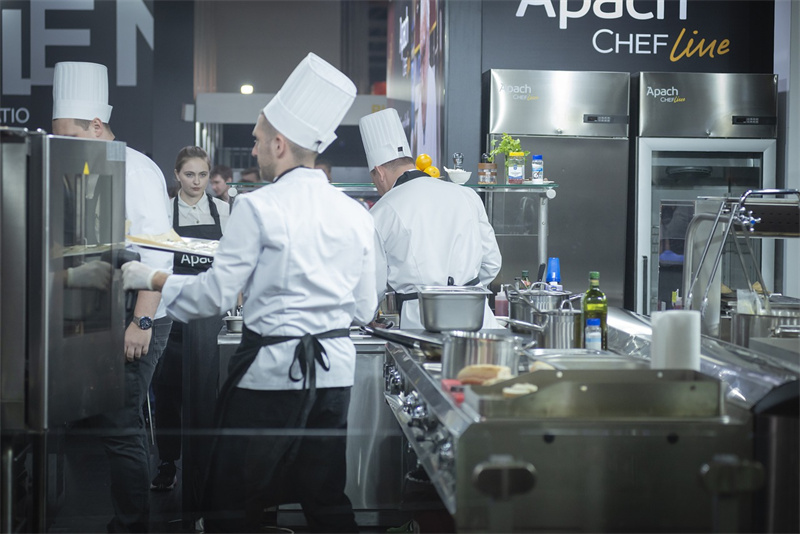
A Comprehensive Guide to Building Your Commercial Kitchen in Australia
Prologue: A Sun-Drenched Dream in Melbourne
Sarah stood in the raw, brick-walled shell of a former warehouse in a trendy Melbourne laneway. The winter sun streamed through the high windows, illuminating dust motes dancing in the air. In her mind, the space was already buzzing. She could hear the sharp, rhythmic chop of knives on fresh produce, the gentle hiss of a coffee machine, and the lively chatter of diners enjoying her “Modern Australian” menu—a fusion of native ingredients like lemon myrtle and wattleseed with classic European techniques.
But a meeting with a building certifier brought her swiftly back to earth. In Australia, a nation with an uncompromising commitment to safety and quality, launching a restaurant is a meticulously regulated journey. The path from a dusty shell to a compliant, high-performing kitchen is paved with Australian Standards, local council bylaws, and a deep-seated cultural emphasis on work health and safety. For Sarah, her dream needed a foundation of steel, fire-rated cladding, and perfectly planned workflows.
If you, like Sarah, are embarking on your own Australian culinary venture, this guide is your blueprint. We will navigate the unique landscape of Aussie compliance, from the intricacies of the Food Standards Code to the state-by-state nuances of gas and electrical work, and demonstrate how the right equipment choices are a strategic investment in your success.
The Foundation – Navigating the Australian Regulatory Universe
The planning phase in Australia is defined by a three-tiered system: Federal, State, and Local.
1.1 The Concept and Menu: Defining Your Operational DNA
Australia’s culinary scene is a vibrant mosaic of its multicultural fabric and bountiful local produce. Your menu is the primary driver of your kitchen’s design.
(1)Actionable Insight
Are you a high-volume café needing a bulletproof coffee station and a fast-paced breakfast line? A fine-dining establishment requiring sous-vide baths and precision plating stations? Or, like Sarah, a restaurant focusing on native ingredients that might require specialized preparation areas? Your menu directly translates into your equipment schedule and workflow.
1.2 The Web of Authorities: Your Licenses to Operate
(1)Local Council
It is your most direct point of contact. Your local council is responsible for:
- Development Application (DA): Often required for a change of building use (e.g., warehouse to restaurant) or structural alterations.
- Construction Certificate (CC): Certifies that the proposed building works comply with the Building Code of Australia (BCA).
- Approval to Fit Out: Specific permission to begin the internal fit-out.
- Food Business Registration: You must register your food business with your local council before you begin operation.
(2)State and Territory Health Departments
These bodies enforce the Australia New Zealand Food Standards Code. Environmental Health Officers (EHOs) conduct random and scheduled inspections to ensure compliance.
(3)Food Standards Australia New Zealand (FSANZ)
This federal body sets the Food Standards Code, which is law across Australia. The key for kitchen design is Standard 3.2.3, which outlines specific requirements for food premises and equipment.
(4)Work Health and Safety (WHS) Regulators
Each state has its own WHS body (e.g., SafeWork NSW). They enforce regulations that protect your employees from kitchen hazards.
(5)Energy and Water Authorities
You will need to liaise with providers like Ausgrid in NSW or Jemena in VIC for gas and electricity connections, ensuring you have adequate commercial supply.
1.3 Core Regulatory Frameworks
(1)The Australia New Zealand Food Standards Code
The bible for food safety. It mandates that your business has a documented Food Safety Program based on HACCP principles.
(2)The Building Code of Australia (BCA/NCC)
Governs all aspects of construction, with Volume 1 specifically covering fire safety, structural integrity, ventilation, and accessibility.
(3)Australian Standards (AS/NZS)
These are critical. Key standards include:
- AS/NZS 1668:The use of ventilation and air-conditioning systems – crucial for kitchen exhaust.
- AS/NZS 5601: Gas installations – governs all gas fitting work.
- AS/NZS 3000: Wiring rules – the standard for all electrical work.
Designing for Aussie Compliance and Efficiency
Australian kitchens must be designed for a culture that values both robust output and worker wellbeing.
2.1 Workflow Design: Logic in a High-Wage Economy
In a country with high labor costs, an efficient workflow isn’t just nice to have—it’s essential for profitability.
(1)The “Dirty to Clean” Flow
The design must enforce a linear flow from receiving, to storage, preparation, cooking, plating, and finally, cleaning. Dirty dish returns must never cross paths with clean food or serviceware.
(2)Ergonomics and Safety
Australian WHS laws place a high priority on worker safety. It means designing to minimize bending, lifting, and repetitive strain. Adequate space between stations, anti-fatigue matting, and easily accessible storage are not just best practices; they are a legal responsibility.
2.2 Hygiene by Design: The EHO’s Checklist
Materials: 304-Grade Stainless Steel is the undisputed standard for all food-contact surfaces. It must be smooth, impervious, corrosion-resistant, and easy to clean. Joints should be continuously welded and ground smooth.
(1)Flooring
Must be a durable, non-slip, chemical-resistant commercial-grade material like epoxy or urethane. It must be coved (seamlessly curved up the wall) to a height of at least 100mm to eliminate corners where dirt and bacteria can accumulate.
(2)Ventilation
Not a single hotplate can be turned on without a council-approved ventilation system. The design and installation of your kitchen exhaust hood is one of the most technically regulated aspects of the entire project.
-
 Lestov Tabletop Commercial Induction Flattop Iron Griddle LT-TPL-B105
 -
 Lestov Tabletop 4 Burners Commercial Induction Cooktop LT-TBZ300IV-B105
 -
 Dual Basket Commercial Tabletop Induction Deep Fryer LT-TZL-B105
 -
 Fornello Wok a induzione da tavolo a 2 bruciatori per ristoranti LT-TPA-B135
 -
 Piano cottura a induzione da tavolo a 2 bruciatori per ristoranti LT-TPP-B135
 -
 Piano cottura commerciale a induzione full glass LT-QPM-C335
 -
 Tabletop Commercial 6 Burner Induction Cooktops LT-TBZ300VI-B135
 -
 5000W Countertop Restaurant Induction Wok Burner LT-TAM-B505
 -
 Piano cottura a induzione da tavolo per ristoranti 3500W LT-TPM-B535
Navigating the Maze of Australian Standards
3.1 Gas, Electrical, and Plumbing – The Licensed Trades Trio
In Australia, you cannot DIY any of these. Using licensed tradespeople is non-negotiable.
(1)Gas Safety (AS/NZS 5601)
Only a licensed gasfitter can install or work on gas appliances. They will provide a Certificate of Compliance upon completion, which you must keep for audit purposes. Gas installations are subject to strict spacing and clearance requirements from combustible materials.
(2)Electrical Safety (AS/NZS 3000)
A licensed electrician must do all work. You will receive an Electrical Certificate of Compliance. A tagging and testing regime for all portable appliances is a mandatory part of your WHS duties.
(3)Plumbing
All plumbing work must be performed by a licensed plumber and comply with the National Construction Code and local water authority regulations. It includes the correct installation of grease traps, which are mandatory for commercial kitchens.
3.2 Lestov & The Electric Advantage
In Australia’s evolving energy landscape, with a strong push towards decarbonization and rising gas costs, commercial induction cooking is rapidly moving from alternative to mainstream.
(1)Simplified Compliance
Choosing Lestov induction cooktops significantly simplifies your gas compliance journey. There is no need for complex gas pipework, ventilation calculations for gas combustion air, or the associated gas safety certificates. It can streamline your DA and CC approvals.
(2)WHS and Comfort
Lestov units eliminate open flames and radiant heat, creating a safer and significantly cooler work environment for your staff. It is a tangible benefit under your WHS obligations and helps reduce air conditioning costs in the kitchen.
(3)Precision for Produce
Australian chefs are renowned for showcasing the quality of local ingredients. The instantaneous and precise temperature control of Lestov induction allows for perfect searing of Barramundi or gentle simmering of a native fruit coulis, ensuring the integrity of the produce is respected.
-
 Tabletop Automatic Wok Cooking Machine for Restaurant Kitchen LT-TCD300-B205
 -
 Tabletop Automatic Stir-frying Wok Machine for Restaurant LT-CD300T-C105
 -
 Automatic Robotic Wok Cooking Machine for Restaurant Canteen LT-CD300-B205
 -
 Countertop Commercial Gas Automatic Fried Rice Machine LT-TGD36R
 -
 Automatic Cooking 6 Burners Commercial Induction Cooker LT-B300VI-E235
 -
 Wok elettrico industriale automatico per stufare LT-XC80
 -
 Heavy-duty Automatic Stir-Fryer for Commercial Kitchen LT-GD36
 -
 Tabletop Automatic Cooking Stirrer for Commercial Kitchen LT-TBS-30
 -
 LT-GQ60 Macchina automatica extra large per la cottura del riso fritto
3.3 Ventilation & Fire Suppression – The Council’s Top Priority
(1)Kitchen Exhaust Systems (AS/NZS 1668)
Your exhaust canopy must be designed by a specialist to capture and remove grease, vapor, and odors. It must be constructed from non-combustible materials (typically stainless steel) and include easily removable grease filters.
(2)Automatic Fire Suppression Systems
The BCA and local council typically require any kitchen using solid-fuel cooking, deep-frying, or chargrilling to have an automatic wet chemical fire suppression system installed within the hood and ducting. This system must be installed and maintained by a certified technician.
3.4 Ventto Ventilation Systems
A poorly designed ventilation system is the number one reason for council inspection failures. The Ventto Aus-Spec Kitchen Ventilation System is engineered to comply fully with AS/NZS 1668.2. Its high-performance capture velocity ensures grease and smoke are effectively contained, while its advanced baffle filters are designed for easy removal and cleaning—a key point EHOs and fire safety officers check.
Furthermore, the Ventto system is pre-engineered for seamless integration with major fire suppression brands, providing a certified, compliant package that gives both you and the council confidence.
3.5 Food Safety & HACCP – The EHO’s Focus
Your relationship with the visiting EHO will be heavily influenced by your documented Food Safety Program and the physical evidence of its implementation.
3.6 ShuaiDun Sanitation
In Australia’s strict food safety regime, verifiable sanitation is non-negotiable.
(1)The Dishwashing Barrier
The ShuaiDun ProHeat Series High-Temperature Dishwashers are engineered to provide auditable proof of sanitation. They feature digital temperature loggers that can be integrated into your HACCP documentation, demonstrating that the final rinse consistently achieves the pathogen-killing temperature of 82°C or higher, as recommended by the Food Standards Code.
(2)Chemical-Free Sanitizing
For items that cannot withstand high-temperature washing, the ShuaiDun steaming Cabinet Sanitizers offer a powerful, chemical-free “kill step.” Placing these units at key prep stations allows staff to sanitize knives, tweezers, and small utensils efficiently, providing a robust defense against cross-contamination that EHOs will recognize as a best-practice intervention.
The Implementation Playbook – Sarah’s Path to Opening
1. Feasibility & Business Plan
Sarah secures funding and finalizes her “Modern Australian” concept.
2. Engage a Design Team
She hires an architect, a building certifier, and a services engineer. She engages us early for kitchen design and equipment planning.
3. Submit Development Application (DA)
Her architect submits the DA to the local council, including detailed plans of the kitchen layout.
4. Obtain a Construction Certificate (CC)
Once the DA is approved, a CC is obtained, often from a private certifier, confirming the build complies with the BCA.
5. Construction & Procurement
The main contractor begins the fit-out. Sarah places her equipment order with us, locking in lead times for her Lestov, Ventto, and ShuaiDun suite.
6. Licensed Trades & Installation
Licensed electricians, plumbers, and gasfitters do their work. Our technicians install and commission all equipment, coordinating with the trades for final connections.
7. Final Inspections & Certifications
- The Building Certifier does a final inspection and issues an Occupation Certificate.
- The Council EHO conducts a pre-opening inspection, reviewing her Food Safety Program and the physical kitchen.
8. Food Business Registration
Sarah formally registers her business with the local council.
9. Grand Opening
Sarah’s restaurant, “The Laneway Larder,” opens to the public.
Beyond Compliance – Thriving in the Australian Market
1. Sustainability as a Selling Point
Australian consumers are increasingly environmentally conscious. Investing in energy and water-efficient equipment is both a cost-saving measure and a powerful marketing tool.
2. The Outdoor Dining Culture
Many Aussie restaurants feature alfresco areas. Consider how your kitchen workflow can efficiently service these sections.
We understand that building a kitchen in Australia is about more than just meeting standards; it’s about building a resilient business in a competitive market. We act as your Australian Kitchen Compliance Partner.
From ensuring your Lestov induction choices align with energy goals, to guaranteeing your Ventto system meets AS/NZS 1668, and providing verifiable sanitation for ShuaiDun in support of your HACCP plans, we offer an integrated, compliant ecosystem. We help you navigate the state-based regulations to create a kitchen that is not only legal but is a powerhouse of efficiency and safety.
Epilogue: A New Culinary Standard Down Under
Months later, “The Laneway Larder” is a celebrated addition to Melbourne’s food scene. The kitchen is a model of efficiency and compliance. The Lestov induction tops give Sarah’s chefs unparalleled control over her native ingredient-focused dishes, the Ventto system keeps the air clear even during a hectic Saturday night service, and the ShuaiDun ProHeat dishwasher provides peace of mind with every rack of clean plates.
The journey through Australia’s regulatory landscape was detailed and demanding. Still, by viewing each standard as a blueprint for quality, Sarah created not just a restaurant, but a benchmark for modern Australian dining.
Ready to build the heart of your Australian food venture? Contact us today. Let’s discuss how Lestov, Ventto, and ShuaiDun can form the core of a kitchen designed for success in the Australian market.
macchina di cottura automatica macchine di cottura automatiche bbq chip fryer commercial cooking equipment commercial drop in induction cooker commercial food steamer commercial induction cooker commercial induction cooktop friggitrice commerciale a induzione commercial induction fryer piano di cottura a induzione commerciale commercial induction soup cooker Cuocitore a vapore a induzione commerciale commercial induction wok cooker cucina commerciale cookware food steamer hob induction cooker induction cookware INDUCTION FRYER induction grill induction hob iron wok kitchen equipment repair guide restaurangt equipment restaurant equipment stainless steel cookware user's guidance
Messaggi correlati


Comments (0)