
In the fast-paced world of the food service industry, your kitchen is the heart of…
Beyond the Wok: Understanding Europe’s Commercial Kitchen Choices
Imagine the sound. In a bustling restaurant kitchen in Guangzhou, the defining rhythm is the metallic clang of a wok hitting the ring of a roaring gas burner, the fierce whoosh of a flame, and the rapid sizzle of ingredients dancing in a searing hot bowl of iron. It’s a symphony of wok hei – the elusive “breath of the wok” that defines great stir-fry.
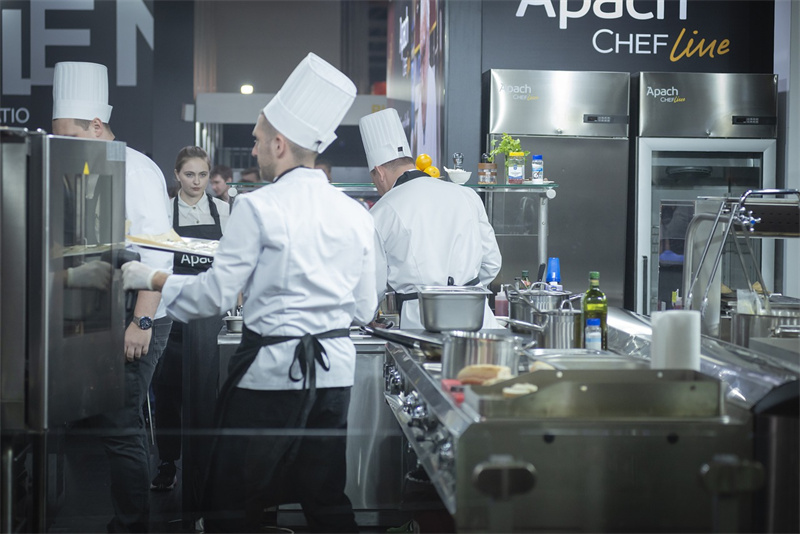
Now, picture a kitchen in Paris, Berlin, or Milan. The soundtrack is different. You hear the consistent, gentle hum of efficient equipment. The dominant sounds are the steady hiss of a dozen steaks searing on a vast, flat hotplate, the controlled bubble of a reduction sauce in a heavy-based pot, and the rhythmic dunking of baskets into a deep fryer. It’s a symphony of precision and volume.
If you’re a Chinese manufacturer of commercial induction cookers looking to expand into Europe, this difference isn’t just cultural trivia—it’s the fundamental key to your market strategy. A common question we at Lestov encounter is: “Why do European kitchens prefer your induction griddles, hot-top ranges, and fryers so much more than your powerful induction wok ranges and massive steamers?”
The answer isn’t about one technology being superior to another. It’s about the beautiful, intricate relationship between culture, cuisine, and the tools used to create it. Let’s embark on a journey to understand why European kitchens are equipped the way they are, and how a forward-thinking brand like Lestov doesn’t just sell appliances, but provides culinary solutions for every chapter of a chef’s story.
The Heart of the Kitchen–A Tale of Two Cuisines
At its core, the equipment in any commercial kitchen is a direct reflection of the cuisine it produces. You wouldn’t use a scalpel to chop wood, and you wouldn’t use an axe for surgery. Similarly, kitchen tools are carefully selected to bring a specific culinary vision to life.
1. The European Kitchen: The Empire of Pan, Grill, and Fry
European culinary traditions, while diverse, share common technical threads that have shaped their kitchen landscapes:
(1)The Primacy of the Pan (Griddle/Plancha)
Think of the iconic dishes. The perfect sear on a Bavarian pork knuckle, the golden-brown crust on a French steak frites, the evenly grilled vegetables for an Italian antipasto, or the flawless pancake for a Sunday brunch service.
These require a large, flat, consistent heating surface. A flat griddle or plancha is irreplaceable for this. It allows for high-volume cooking—you can fit twenty steaks or fifty sausages on a large griddle simultaneously, all cooking evenly. It is about throughput, consistency, and achieving the famous Maillard reaction on a grand scale.
-
 Lestov Tabletop Commercial Induction Flattop Iron Griddle LT-TPL-B105
 -
 Tabletop Restaurant Induction Flattop Cooking Griddle LT-TPLII-B135
 -
 Restaurant Electric Teppanyaki Grill Dosa Tawa LT-TBS-E108
 -
 Tabletop Restaurant Electric BBQ Grill LT-TSKL-E112
 -
 Commercial Electric BBQ Grill with Caster LT-SKL-E112
 -
 Freestanding Food Truck Induction Griddle with Thermostat LT-PL-E108
 -
 Induktionshällar för kommersiellt bruk med termostat LT-TPL-B135
(2)The Simmering Core (Hot-Top/Brassery Range)
European cuisine is built on a foundation of sauces, stews, and braises. A Béarnaise sauce needs gentle, precise heat. A Coq au Vin or a Goulash requires long, slow, uniform simmering. The induction hot-top range (often called a brattery range in Europe) is the perfect tool.
Its flat surface provides stable, diffused heat ideal for heavy stockpots and saucepans. Multiple pots can be kept at different precise temperatures right next to each other, a crucial workflow for a sauce chef (saucier).
-
 Lestov Tabletop 4 Burners Commercial Induction Cooktop LT-TBZ300IV-B105
 -
 Double Burners Commercial Induction Hobs LT-B300II-E105
 -
 Automatic Cooking 6 Burners Commercial Induction Cooker LT-B300VI-E235
 -
 Restaurang 6 Brännare Induktion Inbyggd Soppkokare LT-D300VI-B105
 -
 Fyra zoner 2 brännare kommersiell induktion Wok-spis LT-B300VI-B105
 -
 Induktionshäll med dubbla brännare för kommersiellt bruk med elspis LT-B300II+DTLII
 -
 Induction Stove with Commercial Induction Pasta Cooker LT-B290II+B300+ZML
 -
 Uppresningsbar kommersiell induktionswokhäll med elspis
 -
 Tabletop Integrated 4 Burner Commercial Induction Range LT-TBZ300IV
(3)The Unavoidable Fryer (Deep Fat Fryer)
Let’s be honest: from British fish and chips to Belgian frites, Spanish churros, and Italian fritto misto, frying is a pillar of European casual dining. A high-capacity, efficient, and thermostatically controlled double or triple vat fryer isn’t a luxury; it’s a non-negotiable workhorse for a huge segment of the market.
2. The Chinese Kitchen: The Realm of the Wok and Steam
Contrast this with the demands of traditional Chinese cooking:
(1)The Quest for Wok Hei (Round-Bottom Wok Range)
Stir-frying is an art form. It requires intense, immediate heat (often exceeding 40kW in gas burners) and a round-bottom wok that allows for rapid tossing and turning. The goal is to cook ingredients in seconds over a fierce flame, infusing them with that complex, smoky aroma known as wok hei. It is a specialized technique that demands a specialized tool: the high-power wok range with a concave burner or induction element.
-
 Double Burners Commercial Induction Wok Cooker with 2 Pots LT-X400II-E108S
 -
 Tilting Commercial Induction Flattop Bratt Pan for Food Industrial LT-PC150-F120
 -
 Double Burners Industrial Induction Wok Stove LT-X400Ⅱ-E108Y
 -
 Restaurant Chinese Induction Wok Range With Water Pot LT-X400-Y
 -
 Kinesisk kommersiell induktionswokspis med en brännare LT-X400
 -
 Kommersiell induktionsbrännare för wok med stor stekpanna LT-X400-D800
 -
 Industriell köksinduktion Kwali Wok Range för en enhet till salu D900
 -
 Kraftig kinesisk kommersiell induktionsspis Kadai D800
 -
 Single Burner Industrial Induction Kwail Wok Range Cooker D600
(2)The Art of Steaming (Steam Cabinet)
Steaming is not an afterthought in Chinese cuisine; it’s a primary cooking method for everything from delicate fish and dumplings (such as dim sum) to whole chickens and ribs. A large, multi-tiered steam cabinet is essential to produce the volume and quality required, providing consistent, penetrating moist heat that no pot on a range can replicate.
(3)The Slow Brew (Soup/Slow Cooker)
Nourishing broths and herbal soups that simmer for hours, even days, are a cornerstone of the cuisine. Dedicated soup stoves or slow-cooker ranges are designed to maintain very low, steady heat for these prolonged preparations.
So, the primary reason European kitchens buy more griddles and brattery ranges is simple: they are cooking European food. They are optimizing for their menu, their volume, and their centuries-old techniques.
-
 12 Steaming Trays Restaurant Induction Food Steamer LT-ZF12-120
 -
 Industrial Induction Cooking Rice Steamer 12 Trays LT-ZF12-E115
 -
 Double Tiers Restaurant Induction Rice Roll Steamer LT-CFII-E115
 -
 Commercial Countertop High Temperature Food Steamer LT-GZ-B105
 -
 24 Trays Commercial Induction Rice Steamer LT-ZF24-E120
 -
 Restaurang Induktion Dim Sum ångkokare LT-QXL-E115
 -
 3 nivåer kommersiell induktionsångare för fisk och skaldjur LT-HI-E125
II. Beyond the European Ecosystem of Rules and Efficiency
The story doesn’t end with cultural preferences. Deeper structural factors make induction-based equipment like Lestov’s not just a preference, but a strategic necessity for modern European kitchens.
1. The Green Mandate – Energy Transition and Sustainability
Europe is at the forefront of the fight against climate change. Cities like Amsterdam, Berlin, and London are implementing stringent regulations phasing out fossil fuels. New construction projects, especially commercial ones, are often mandated to be all-electric. Natural gas connections are being refused.
It isn’t a future trend; it’s a present-day reality. Induction technology is the only viable, powerful, and efficient alternative. It converts over 90% of its energy into heat (compared to ~40% for gas), slashing energy costs and carbon footprints instantly. For a European restaurateur, choosing induction is no longer just about cooking; it’s about compliance, corporate social responsibility, and future-proofing their investment.
2. The Code of Safety and Comfort
Commercial kitchens are dangerous environments. Open flames, gas leaks, and immense radiant heat are constant hazards. Induction cooktops change the game. The cooktop itself doesn’t get hot; only the pan does. It drastically reduces:
- Burn risk for staff.
- Ambient kitchen temperature creates a much more comfortable working environment (a huge benefit for employee retention).
- Fire insurance premiums, a significant operational cost.
- The need for massive, energy-guzzling extraction hoods, because there are no combustible gases or products of combustion to remove, only steam and vapors from the food.
3. The Gospel of Precision and Consistency
European cooking, particularly French and Modern European, prizes precision. A classic gas range requires skill and feel. Induction offers digital precision. A sauce can be held at exactly 85°C indefinitely. A griddle surface can be set to a perfect 180°C from edge to edge, ensuring every piece of food gets the same sear. It reduces human error, enhances plate-to-plate consistency, and simplifies staff training.
III. The Fusion Frontier There a Place for Chinese Equipment in Europe?
It is the critical question for a manufacturer like us. The answer is a resounding yes, but with nuance.
The European culinary scene is no longer monolithic. It’s a vibrant tapestry of fusion food, authentic ethnic restaurants, and adventurous diners.
1. The Rise of Authentic Asian Cuisine
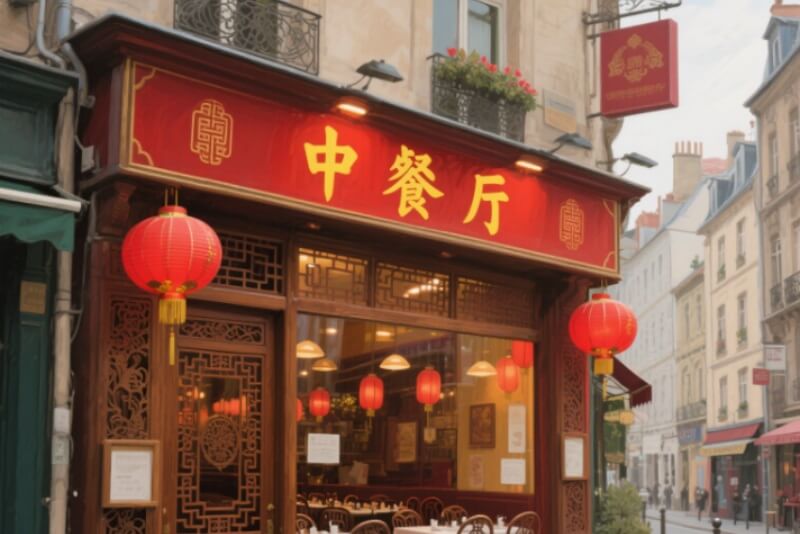
Major European cities have thriving Chinatowns and a growing number of high-end, authentic Chinese, Thai, Vietnamese, and Korean restaurants. For these establishments, specialized equipment is non-negotiable. You cannot serve authentic Kung Pao Chicken without a powerful wok range.
You cannot run a dim sum service without a powerful steamer. It is a dedicated and growing niche market for manufacturers who can provide high-performance, induction-based versions of these traditional tools.
2. The Fusion Workflow
Many modern European restaurants incorporate Asian elements into their menu. They might have a stir-fried vegetable side dish or a steamed bao bun as an appetizer. However, they don’t need a full-sized, dedicated wok range that occupies precious kitchen space for one or two menu items. It is where Lestov’s innovation shines.
- Could a powerful, compact induction wok burner be integrated as a station within a European kitchen? Absolutely. It provides the function without the permanent footprint of a full-sized range.
- A versatile combi-steamer oven (a European invention) might often be preferred over a large dedicated steamer cabinet, as it can steam, bake, roast, and regenerate, offering more menu flexibility in a smaller space.
The key is not to simply plonk a traditional Chinese appliance into a European kitchen and expect it to work. The integration must be thoughtful, considering space constraints, menu engineering, and the need for operational flexibility.
IV. The Lestov Philosophy-We Don’t Sell Appliances, We Enable Cuisine
At Lestov, we’ve moved beyond just being a manufacturer. We see ourselves as enablers of culinary vision. We understand that the landscape is changing, and the most successful kitchens are those that are adaptable, efficient, and sustainable.
Our approach to the European market is built on three pillars:
1. Mastering the Core
We offer best-in-class versions of the equipment European kitchens fundamentally need. Our induction griddles provide unparalleled temperature uniformity across the entire surface. Our induction hot-top ranges offer precise digital control for delicate sauces. Our fryers heat up faster and maintain temperature more accurately, ensuring perfect results while using less oil. We speak the language of the European chef fluently.
2. Bridging the Divide
We are uniquely positioned to serve the entire spectrum of the market. For the authentic Szechuan restaurant in London, we offer high-power induction wok ranges designed to deliver the intense heat necessary for wok hei, all within the safety and efficiency of induction.
For the modern tapas bar in Barcelona that wants to add a steamed bao to its menu, we might recommend a versatile countertop induction steamer or show them how a combi-oven can achieve their goal.
3. The Universal Language of Benefits
Whether a kitchen is cooking coq au vin or char kway teow, the benefits of Lestov induction are universal:
- Slashed Energy Costs: Our efficiency directly improves your bottom line.
- Enhanced Safety: A cooler, safer kitchen protects your team and your business.
- Reduced Carbon Footprint: You can market your sustainability proudly to your customers.
- Precision Control: Empower your chefs to create consistent, perfect dishes every time.
- Easier Cleaning & Maintenance: Our smooth, flat surfaces are designed for quick cleanup, keeping your kitchen spotless and efficient.
A Story from Our Showroom: Marco’s Dilemma
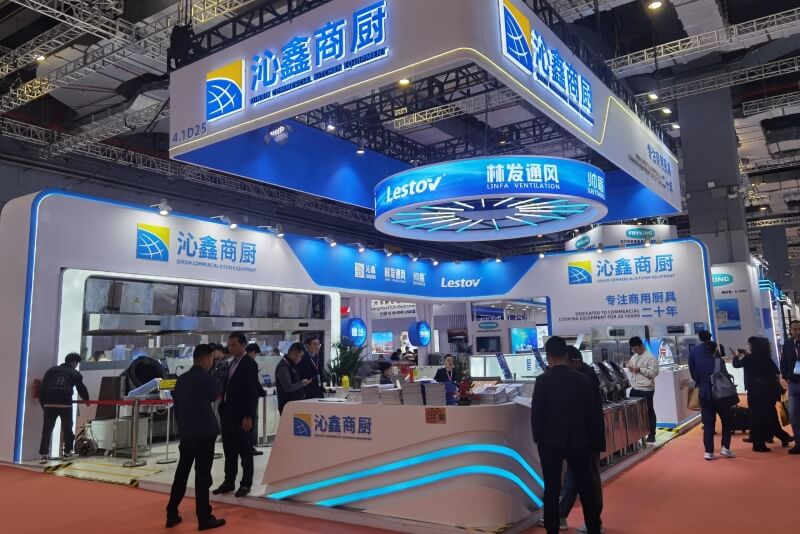
Let me tell you about Marco, a young, ambitious Italian chef who visited our showroom. He was opening his first restaurant in Munich—a modern “Italian-Asian Fusion” concept. He was passionate but overwhelmed.
“I need to sear scallops for my risotto, reduce a balsamic glaze, fry calamari, and I have this amazing recipe for a stir-fried pasta with Asian greens,” he explained. “I was told I need a gas grill, a gas range, a fryer, and a wok burner. But my building is all-electric, and the space is tiny!”
Our solution wasn’t to sell him four separate pieces of equipment. We designed a compact kitchen line for him featuring:
- A Lestov Induction Griddle for the scallops and to use as a solid cooking surface.
- A Lestov Induction Hot-Top Range with two zones for his sauces and a built-in Lestov Induction Wok Burner at one end.
- A compact, efficient Lestov Double Basket Fryer.
He got all the functionality he needed in a fraction of the space, with 100% electric power, minimal ventilation requirements, and a lower operational cost. He wasn’t buying appliances; he was buying the capability to execute his dream menu.
Conclusion: The Future is Electric, Flexible, and Delicious
The difference in kitchen equipment between Europe and China is a fascinating story of cultural heritage. But the future of commercial kitchens is converging on a set of shared values: efficiency, sustainability, safety, and flexibility.
European kitchens need griddles, ranges, and fryers because that’s what their culinary heritage demands. And as that heritage evolves to embrace global flavors, the equipment must evolve too.
At Lestov, we are not just observers of this change; we are active participants. We provide the tools—from the classic to the innovative—that allow chefs, whether in a Parisian bistro, a Berlin food hall, or a London fusion kitchen, to translate their passion onto the plate. We understand the ‘why’ behind the equipment, and that allows us to build the ‘how’ for any culinary dream.
So, whether your menu is built on the perfect sear or the breath of the wok, remember: the right tool doesn’t limit creativity; it sets it free. And that’s a philosophy we’re proud to power.
automatic cooking machine automatic cooking machines bbq chip fryer commercial cooking equipment commercial drop in induction cooker commercial food steamer commercial induction cooker commercial induction cooktop kommersiell induktionsfritös commercial induction fryer commercial induction hob commercial induction soup cooker Kommersiell induktionsångkokare commercial induction wok cooker commercial kitchen cookware food steamer hob induction cooker induction cookware INDUCTION FRYER induction grill induction hob iron wok kitchen equipment repair guide restaurangt equipment restaurant equipment stainless steel cookware user's guidance
Related Posts


Comments (0)