
Deep in the night market in the old city of Jakarta, the cough of satay…
Gas vs. Induction: A Chef’s Raw, Honest Take on the Heart of Your Kitchen
Let me wipe my hands on my apron, take a deep breath, and talk to you straight. After years dancing the relentless ballet of the professional kitchen – the clatter of pans, the roar of the rush, the sweat, the pressure – I know one thing for absolute certain: your stove isn’t just equipment.
It’s the foundation of your craft, the engine of your service, and often, your fiercest ally or most frustrating foe. Choosing between a traditional gas beast and a modern induction marvel? It’s a decision that shapes your workflow, your costs, and ultimately, your food. Let me break it down for you, not from a sales brochure, but from the hot, greasy trenches.
I. The Roar of the Flame: My Gas Roots
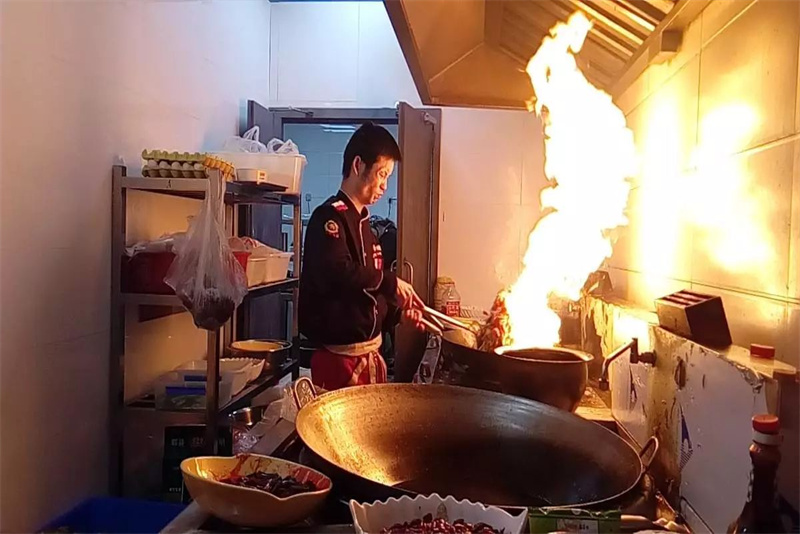
I cut my teeth on gas. There’s something undeniably primal and immediate about it. You see the blue jets roar to life with a satisfying whoosh, and you feel the intense heat radiating across the pass.
For tasks requiring direct fire – charring peppers blistering over open flames, getting that perfect wok hei (the elusive “breath of the wok”) by tossing ingredients violently over a jet-engine burner, or evenly searing a massive ribeye across a broad grate.
Gas feels like an extension of your instinct. You can judge heat by the height and colour of the flame, adjust instantly with a flick of the wrist, and slide pans effortlessly across the grate. It’s visceral, it’s powerful, and it’s deeply ingrained in culinary tradition.
1. But Chef, The Burn (The Downsides):
(1)The Inferno
That radiating heat? In July, during a 12-hour shift with the exhaust roaring, it turns your station into a sauna. Staff fatigue is real, and comfort impacts performance and safety.
(2)The Greasy Beast
Cleaning gas ranges is a nightmare. Burner caps, grates, and spill trays – grease gets everywhere, bakes on, and requires serious elbow grease and chemical warfare nightly. Time is money, folks.
(3)The Energy Guzzler
So much of that precious, expensive heat escapes around the pan, rather than being absorbed into it. Warming the kitchen air instead of your soup? That’s pure waste, hitting your bottom line hard. Efficiency is often 40% or less.
(4)The Safety Dance
Open flames. Grease. High-pressure gas lines. It’s a calculated risk. Flare-ups happen, burns happen, and the potential for gas leaks is a constant, low-level stress.
(5)The Ventilation Anchor
Gas demands massive, powerful, expensive hood ventilation systems running constantly, chewing up even more energy (and needing constant cleaning).
II. The Silent Revolution: Embracing Induction
When I first used a serious commercial induction hob, I’ll admit, I was skeptical. No flame? No roaring sound? How could this sleek glass top possibly compete? Then I boiled a pot of water in literally under a minute.
Then I melted chocolate without a double boiler – perfectly, without a hint of scorch. Then I realized my station wasn’t a furnace anymore. I was hooked.
1. Why Induction Won This Chef’s Heart (The Real Benefits):
(1)Speed Like Lightning
Ittto directly heat the pan itself. Almost no energy is wasted. Water boils in record time. Oil hits searing temperatures frighteningly fast. When tickets pile up, this responsiveness is pure gold. Efficiency? Often 85-90%. That’s a direct saving on your gas or electric bill.
(2)Pinpoint Precision & Control
Forget “high,” “medium,” “low.” Modern induction offers digital temperature control to a degree. Simmer sauces without any risk of catching? Done. Hold delicate custards at exactly 82°C? Easy. Replicate settings perfectly every time? Absolutely. This level of control elevates consistency, especially for intricate sauces, chocolates, or delicate proteins.
(3)Cooler, Cleaner, Calmer Kitchen
The cooktop surface stays relatively cool (only heated indirectly by the pan). Radiant heat is minimal. My cooks aren’t drenched in sweat just from standing at their station. Morale improves. Safety improves (no open flames, no gas leaks).
And cleaning? A dream! Wipe down the smooth glass surface – spills don’t bake on. No dismantling grates or scraping burner ports. It saves significant labor time daily.
(4)Enhanced Safety
No open flame means dramatically reduced fire risk, especially with flammable oils. Automatic pan detection shuts off power if a pan is removed. No combustion gases (like CO, CO2) are released into your kitchen. The surface cools quickly after turning off.
(5)Energy & Ventilation Savings
The high efficiency directly cuts energy costs. Crucially, because so little ambient heat is produced, your exhaust hood system doesn’t need to work nearly as hard or move as much air.
It translates to massive savings on ventilation energy costs and potentially allows for smaller, less expensive hood systems in new builds or remodels.
2. The Induction Reality Check (It’s Not All Perfect):
(1)Pan Dependency
You must use magnetic cookware (cast iron, magnetic stainless steel). That beautiful copper pot or your old aluminum workhorse? Useless here. Factor in potential cookware replacement costs.
(2)Upfront Investment
High-power commercial induction units are generally more expensive to purchase upfront than comparable gas ranges. However, the operational savings (energy, labor, ventilation) often provide a compelling ROI over time.
(3)Power Needs
Serious commercial induction requires robust electrical infrastructure (high amperage circuits, often 208-240V). Retrofitting an old kitchen can be a significant cost.
(4)The “Feel” Factor
You lose the visual flame cue. Some chefs (especially older ones) miss the tactile feedback of adjusting a gas valve. It takes a short while to adapt to digital controls and trust the sensor.
(5)Extreme High-Heat Tasks
While induction gets incredibly hot very fast, achieving the sheer radiant heat blast of a dedicated super-high-BTU gas wok burner for true wok hei is still a challenge for most standard induction units (though specialized high-power wok induction models are emerging).
3. The Chef’s Verdict: What I Recommend & Why
My personal, hard-earned preference? Commercial Induction. The speed, precision, safety, cleanliness, and long-term operating cost savings are simply too compelling for the vast majority of modern restaurant applications.
4. Who Should Seriously Consider Induction?
- Fine Dining/Sauce-Heavy Kitchens: Unmatched precision for delicate work.
- Pastry & Baking Stations: Perfect temperature control for chocolate, sugar, and custards.
- High-Volume Breakfast/Brunch: Rapid water boiling, precise egg cooking.
- Kitchens Prioritizing Staff Comfort & Safety: A cooler environment, with no open flames.
- New Builds or Major Renos: Where electrical infrastructure can be planned efficiently.
- Sustainability-Focused Establishments: Significantly lower carbon footprint and energy use.
5. Who Might Still Lean Towards Gas (For Now)?
- Authentic High-Heat Wok Cooking: Until specialized ultra-high-power induction wok units become mainstream and affordable.
- Wood-Fired/Charcoal-Focused Kitchens: Where gas might be used for supplemental direct heat.
- Kitchens with Severe Electrical Limitations (and no budget to upgrade).
- Extremely Budget-Constrained Startups (short-term view only): Where the lowest possible initial equipment cost is the absolute paramount concern, despite higher operating costs.
-
 Lestov Tabletop 4 Burners Commercial Induction Cooktop LT-TBZ300IV-B105
 -
 Double Burners Commercial Induction Hobs LT-B300II-E105
 -
 Automatic Cooking 6 Burners Commercial Induction Cooker LT-B300VI-E235
 -
 Restaurang 6 Brännare Induktion Inbyggd Soppkokare LT-D300VI-B105
 -
 Fyra zoner 2 brännare kommersiell induktion Wok-spis LT-B300VI-B105
 -
 Induktionshäll med dubbla brännare för kommersiellt bruk med elspis LT-B300II+DTLII
 -
 Induction Stove with Commercial Induction Pasta Cooker LT-B290II+B300+ZML
 -
 Uppresningsbar kommersiell induktionswokhäll med elspis
 -
 Tabletop Integrated 4 Burner Commercial Induction Range LT-TBZ300IV
III. What This Chef Demands from ANY Commercial Stove:
Whether you lean toward gas or induction, never compromise on these core professional needs:
1、Raw Power & Responsiveness
It needs to get blisteringly hot, fast, and respond instantly to adjustments. No lag. Period. (Look for high kW/BTU ratings).
2、Durability & Build Quality
It is not home kitchen gear. It must withstand 12-hour shifts, heavy pans being slammed down, spills, and constant cleaning. Commercial-grade stainless steel, robust knobs/controls, solid construction. No flimsy components.
3、Ease of Cleaning
Flat, seamless surfaces (induction naturally wins here), minimal crevices, and removable parts that can go in the dish pit. Sanitation is non-negotiable.
4、Precise Control
Fine-grained adjustments are crucial, whether it’s a sensitive gas valve or responsive digital touch controls.
5、Safety Features
Automatic reignition (gas), pan detection (induction), tip-over switches, clear indicators, and robust safety certifications.
6、Ergonomics & Usability
Comfortable height, intuitive controls (even when you’re flustered during the rush), well-placed knobs/buttons, easy-to-read displays.
7、Reliability & Serviceability
Minimal downtime is critical. Choose reputable brands with good local service, support, and readily available parts. Modular designs help.
The Final Sizzle
The flame has its history, its romance, and its undeniable power for specific tasks. But standing here today, looking at the demands of modern kitchens – efficiency, precision, staff well-being, safety, and sustainability – commercial induction isn’t just the future; it’s the present for chefs who want to perform at their peak and run a smarter, more profitable kitchen.
It requires an investment, both in the equipment and potentially in cookware and infrastructure. But when I calculate the savings on my energy bills, the hours saved on labor cleaning gas ranges, the reduced ventilation costs, the cooler and safer environment for my team, and the sheer joy of having instant, precise heat at my fingertips… the choice becomes crystal clear.
Don’t just take my word for it. Get a demo unit in your kitchen. Let your chefs feel the speed, appreciate the cleanliness, and experience the control. Taste the difference consistency makes. Crunch the real numbers on your operating costs.
You might find, like I did, that the silent hum of induction becomes the sound of a smoother, more efficient, and ultimately more successful service. Choose wisely, Chef. Your stove is the heartbeat of your house. Make sure it’s strong, smart, and built for the long haul.
automatic cooking machine automatic cooking machines bbq chip fryer commercial cooking equipment commercial drop in induction cooker commercial food steamer commercial induction cooker commercial induction cooktop kommersiell induktionsfritös commercial induction fryer commercial induction hob commercial induction soup cooker Kommersiell induktionsångkokare commercial induction wok cooker commercial kitchen cookware food steamer hob induction cooker induction cookware INDUCTION FRYER induction grill induction hob iron wok kitchen equipment repair guide restaurangt equipment restaurant equipment stainless steel cookware user's guidance
Related Posts



Comments (0)