
Across North America, Europe, Southeast Asia, and Australia, Asian fast-casual dining, Chinese QSR chains, and…
How Induction Woks, Auto-Stir Fryers, and Induction Hobs Outperform Gas
Across North America, Europe, Australia, and Asia-Pacific, commercial food-service operators are facing a monumental regulatory shift: the rapid phase-out of fossil fuel gas in commercial buildings.
Driven by municipal gas bans, stringent decarbonization mandates, and corporate ESG (Environmental, Social, and Governance) Net-Zero targets, building developers and restaurant groups can no longer install traditional open-flame gas wok ranges or multi-burner gas stock pot stoves in new commercial developments.
For high-volume Asian culinary concepts, Chinese fast-casual chains, and central kitchens, this transition away from gas presents critical operational anxieties:
Severe Energy Waste & Astronomical Utility Bills
Traditional atmospheric gas wok burners deliver dismal thermal efficiency (only 30%–35%), dumping over 65% of purchased gas directly into the kitchen air as waste ambient heat.
Overwhelmed HVAC Systems & Excessive Carbon Footprint
High-BTU gas woks require massive industrial exhaust hoods, soaring electricity consumption for makeup air units, and generate high Scope 1 direct carbon emissions.
Power Grid Constraints During Peak Hours
Operating multiple heavy-duty electric appliances simultaneously can exceed site electrical limits, leading to expensive breaker trips or costly utility peak-demand surcharges.
To achieve total zero-emission compliance without compromising high-heat cooking performance, industry leaders are standardizing on Heavy-Duty Commercial Induction Equipment.
By deploying 商用电磁炉, Automated Induction Stir Fry Machines, and Multiple Burner Commercial Induction Hobs, forward-thinking restaurant operators cut energy consumption by up to 60%, drastically lower kitchen ambient temperatures, and achieve 100% ESG and decarbonization compliance.
(1)TRADITIONAL GAS LINE vs. ALL-ELECTRIC INDUCTION LINE
TRADITIONAL GAS: 30% Efficiency + High Gas Emissions + Extreme Heat → Expensive Utility Bills & Gas Ban Non-Compliance
ALL-ELECTRIC INDUCTION: 90%+ Thermal Efficiency + Zero Scope 1 Carbon → 60% Energy Savings & 100% ESG/Net-Zero Ready
In this commercial kitchen electrification and ESG engineering guide, we examine the physics of high-frequency induction heating, break down peak-shaving dynamic power management, and analyze the total cost of ownership (TCO) for all-electric commercial kitchens.
1. Thermodynamic Efficiency: The Physics of Induction vs. Gas
The core advantage of commercial induction technology lies in its direct thermal transfer mechanism. Traditional gas burners rely on combustion convection, where most heat escapes around the sides of the cookware.
(1)Comparative Thermal Physics
Direct Electromagnetic Coupling
High-frequency induction coils generate an alternating magnetic field that induces eddy currents directly within the iron-based or ferromagnetic alloy cooking vessel (wok, drum, or pot).
90%+ Thermal Efficiency
The cooking vessel itself becomes the heat generator, transferring over 90% of consumed electrical energy directly into the food.
Instantaneous Response & Precision Control
Unlike gas flames that require thermal stabilization, induction delivers instant heat adjustments within milliseconds, eliminating idling heat loss between orders.
(2)THERMAL EFFICIENCY COMPARISON
Atmospheric Gas Wok: [30% Heat to Food] [70% Waste Heat to Kitchen]
Commercial Induction: [90%+ Heat to Food] [10% Minimal Loss]
2. Product Architecture: Delivering Electrification Across the Kitchen Line
To fully eliminate gas infrastructure, commercial kitchens require specialized induction equipment tailored to diverse cooking techniques.
(1)Core Electrification Suite
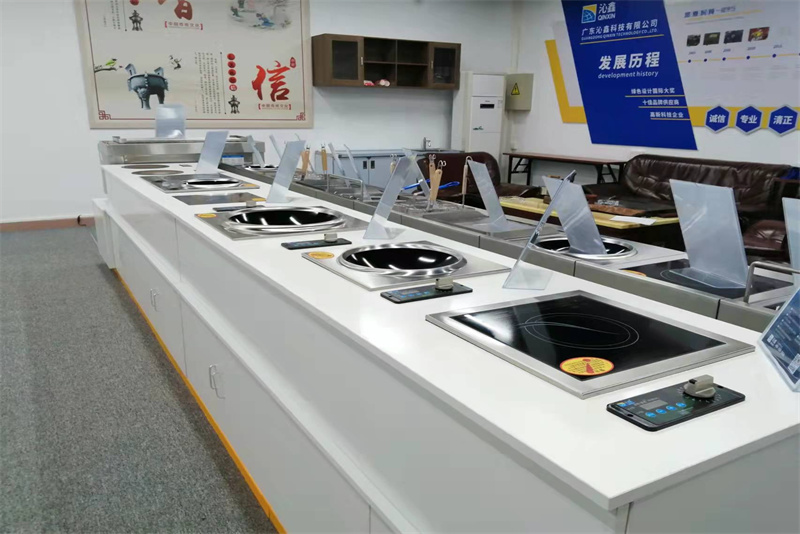
Commercial Induction Wok Cookers (Single/Double Bowl)
Heavy-duty concave ceramic glass bowls paired with high-power induction coils provide instant, searing heat up to 300±℃ for traditional manual wok frying with zero ambient flame.
Automatic Induction Stir Fry Machines
Combining high-frequency induction drum heating with 3D elliptical mechanical tossing, these automated units allow a single operator to manage 3 to 5 stations simultaneously while guaranteeing 100% recipe consistency.
Multiple Burner Commercial Induction Cookers / Hobs
Replacing multi-burner gas stoves, 4-burner and 6-burner induction hobs offer independent microprocessor temperature control for slow-simmering sauces, clay pot rice, and high-volume broth prep in a compact footprint.
(2)ALL-ELECTRIC INDUCTION SUITE
| Induction wok range | Automatic drum wok | Multi-Burner Hob |
| High-heat stir-fry | Automated tossing | Multiple cooking |
| 100% ZERO-EMISSION, HIGH-EFFICIENCY ELECTRIFIED LINE | ||
3. Smart Power Management: Solving Peak-Load Grid Constraints
A major challenge in fully electrified commercial kitchens is managing total electrical demand when multiple high-power appliances run concurrently during peak meal hours.
(1)Peak-Shaving Technology
Dynamic Power Allocation (Peak Shaving)
Microprocessor-controlled multi-burner induction hobs utilize intelligent power-sharing algorithms. If all burners are turned to maximum power simultaneously, the system dynamically balances current draw to stay strictly within the building’s main breaker capacity.
Zero Thermal Idling
Because induction stops drawing power the second a pan is removed or turned off, standby energy consumption drops to near zero, preventing unnecessary grid spikes.
Products by Category
-

3500 瓦商用台式电磁炉 LT-TPM-B135
-

3500W Commercial Portable Induction Wok Burner LT-TAM-B135
-

3500 瓦台式餐厅电磁炉 LT-TAM-A135
-

带旋钮的 4 炉火餐厅电磁灶 LT-B300IV-B135
-

5000W Countertop Restaurant Induction Wok Burner LT-TAM-B505
-

Automatic Cooking 6 Burners Commercial Induction Cooker LT-B300VI-E235
-

Automatic Food Stir-Fryer Wok Machine-LT-CD300L-A105
-

Automatic Robotic Wok Cooking Machine for Restaurant Canteen LT-CD300-B205
-

中式商用单口电磁炉 LT-X400
4. ESG Impact & Environmental Metrics: Decarbonizing Commercial Food-service
Transitioning from gas to commercial induction delivers measurable sustainability metrics that directly enhance corporate ESG reporting.
| Sustainability & Operating Metric | Atmospheric Gas Wok & Stove Line | Commercial All-Electric Induction Line |
| Thermal Efficiency | 30% – 35% (High thermal wastage) | 90%+ (Direct magnetic energy coupling) |
| Direct Scope 1 Emissions | High (CO2, NOx, and unburnt methane) | Zero (100% Zero-Emission On-Site) |
| Kitchen Ambient Temperature | 45℃ – 55℃ (Extremely hot) | 25℃ – 30℃ (Cool & comfortable) |
| HVAC Air Conditioning Load | 100% Baseline Required | 40% – 50% Reduction in HVAC Tonnage |
| Compliance with Municipal Gas Bans | Non-Compliant (Illegal in new builds) | 100% Compliant (Decarbonization ready) |
| Cooktop Surface Cleaning | Complex (Cast-iron grates & carbon buildup) | Rapid (Flat/Concave smooth ceramic glass) |
| Annual Energy Cost Savings | Baseline | 30% – 60% Reduction in Total Utility Bills |
5. Economic ROI & HVAC Cost Reductions
While the initial equipment investment in premium commercial induction is higher than basic gas stoves, the operational savings deliver rapid payback—typically within 8 to 14 months.
(1)Financial Value Drivers
Reduced HVAC Capital Expenditure
Lower heat rejection from induction appliances allows mechanical engineers to downsize exhaust hood CFM (Cubic Feet per Minute) requirements and HVAC chiller capacity by up to 40%.
Lower Insurance Premiums
Eliminating open flames and unburnt gas lines significantly reduces fire risks, lowering commercial property insurance costs.
Labor Efficiency Gains
Automated induction wok machines slash skilled labor dependencies, enabling unskilled staff to produce high-volume dishes with zero training downtime.
6. Conclusion: Future-Proof Your Food-service Business with Commercial Induction
Relying on legacy gas ranges in today’s environmentally regulated commercial market exposes restaurant operators to regulatory fines, rising fossil fuel utility costs, and severe thermal inefficiencies.
By standardizing on Commercial Induction Wok Cookers, Automatic Stir Fry Machines, and Multiple Burner Induction Hobs—featuring 90%+ thermal efficiency, smart dynamic power management, and zero Scope 1 carbon emissions—you eliminate gas ban compliance risks, cut energy expenses by up to 60%, and elevate your brand’s ESG sustainability profile.
Future-proof your kitchen operations, protect your profit margins, and deliver high-performance Asian culinary excellence with commercial-grade induction technology.
If you are a commercial food-service consultant, MEP engineer, hotel group buyer, or equipment distributor seeking factory-direct commercial induction woks, automatic stir fryers, and multi-burner induction hobs, let’s collaborate.
Leave a comment below or contact us directly; we are your premier commercial induction cooking equipment manufacturer. We offer single/double induction woks, standing automatic drum woks, 2/4/6-burner induction hobs, custom OEM/ODM software branding, full CAD/BIM layout support, and factory-direct pricing for international dealers.
Contact our global sales team today to request an induction catalog, ESG energy-savings ROI report, and factory-direct quote for your next project!
自动烹饪机 自动烹饪机 bbq chip fryer commercial cooking equipment commercial drop in induction cooker commercial food steamer commercial induction cooker commercial induction cooktop 商用电磁油炸锅 commercial induction fryer 商用电磁炉 commercial induction soup cooker 商用电磁蒸锅 商用电磁炒锅 商业厨房 cookware food steamer hob induction cooker induction cookware INDUCTION FRYER induction grill induction hob iron wok kitchen equipment repair guide restaurangt equipment restaurant equipment stainless steel cookware user's guidance
相关帖子
.jpg)


Comments (0)